Hortobágy National Park - The Hungarian Puszta
Hortobágyi Nemzeti Park - Puszta
Hajdú-Bihar / Jász-Nagykun-Szolnok · Hungary
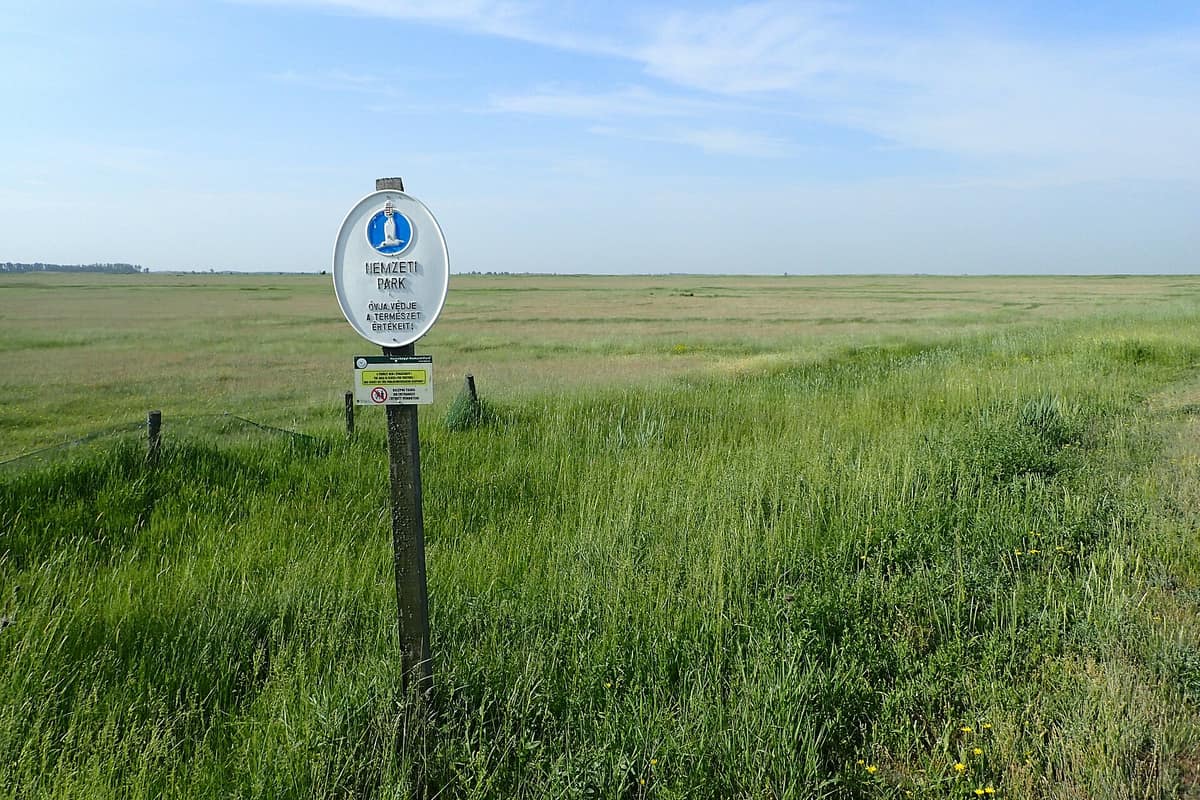
Photo: Krzysztof Ziarnek, Kenraiz · CC BY-SA 4.0 · Wikimedia Commons
Central Europe's largest steppe grassland (80.000 ha) featuring traditional pastoralists and massive crane migrations.
Horizon, sky, and little else. Hortobágy is considered the largest natural alkaline grassland in Europe: 80.000 hectares of plain in eastern Hungary, where the wind ripples the grass and almost nothing interrupts the horizon. Hungary's first national park was created here in 1973, and since 1999 the landscape has been a World Heritage site for a simple reason: people have grazed this steppe for thousands of years without destroying it.
What makes it unique
An alkaline sea of grass nearly ten thousand years old, with equestrian herders, vast autumn flocks of cranes, and fishponds hosting Central Europe's largest spoonbill colony.
The place
Nature
The landscape
The steppe is ancient. Alkalinization began about ten thousand years ago, when the Tisza River carved its way across the Great Hungarian Plain and cut off many streams from their headwaters. That open landscape of endless horizons has been the hallmark of Hortobágy for nearly ten thousand years.
Across this plain, just a few centimetres of elevation difference determine which plant can grow, making the vegetation a rich mosaic: the soil changes, humus decreases, and loess steppe yields to alkaline grassland, dominated by sneezewort yarrow and fescue grasses. Around them, water dictates the rest: marshes that lost their natural inflow from the Tisza and which the park restores through seasonal flooding; and fishponds such as those of Hortobágyi-halastó, a system constructed by hand beginning in 1916 across a saline wetland once known as the «Ugly Land».
Wildlife and seasons
If you travel for birdlife, you have arrived at the epicenter. The park records 342 bird species, and breeders include the great bustard, European bee-eater, European roller, and saker falcon. Over 300 bird species have been documented across the fishponds over the past 35 years, with regular nesting by pygmy cormorants, glossy ibises, Eurasian spoonbills, herons, and greylag geese. The fishpond spoonbill colony is the largest in Central Europe.
Yet the supreme spectacle unfolds in autumn. Hortobágy is the preeminent staging ground along the European migration route of cranes, and the Hortobágyi-halastó serves as a favored nocturnal roost for massive gatherings: autumn excursions escort visitors to observe cranes and geese departing at dawn and returning at dusk. It is also a critical resting point for the globally threatened lesser white-fronted goose. From autumn through spring, white-tailed eagles arrive to winter here.
In the marshes live Eurasian otters, European pond turtles, and grass snakes. Steppe grasslands harbor European ground squirrels (susliks) and European fire-bellied toads.
In the Egyek-Pusztakócs marshes, designated a Ramsar site in 1976, all four grebe species breeding in Hungary nest. Hortobágy also maintains a free-roaming herd of about 25 Przewalski's horses and a breeding centre for Taurus cattle, part of international efforts to back-breed the extinct aurochs.
Species
With a page in the atlas
Being mentioned in a source doesn't guarantee sightings: check with the people who manage the area.
Memory and protection
History and conservation
Hungary's first national park was founded here in 1973; UNESCO inscribed it as a World Heritage site in December 1999, and in 2011 it was declared an International Dark Sky Park. One-third of the park comprises wetlands of international importance under the Ramsar Convention.
Pastoral tradition explains the open landscape. Wild herbivores like wild horses and aurochs were replaced by domestic herds, with Hungarian Grey cattle and spiral-horned Racka sheep serving as cornerstone breeds maintaining open steppe pastures. Mounted herdsmen are known as csikós, and their traditional equestrian lore remains central to Hortobágy's identity. To safeguard endangered species such as great bustard, saker falcon, red-footed falcon, and lesser white-fronted goose, the park manages habitat restoration supported by the European Union.
Rewilding projects
Before you set off
Visiting
How to visit
Everything begins in the village of Hortobágy, where the visitor centre offers three interactive exhibitions: The Nature of Hortobágy, The World of Cranes, and The Treasures of the Puszta. Entering demonstration areas and nature trails requires an entrance card, as visitation within the national park is regulated.
The Hortobágy fishponds trail features no difficult sections and can be completed on foot or by bicycle; trail accessibility may vary with weather. There are three options: the short loop measures 3,6 km out and back to the Konrad Lorenz station; the medium option reaches the pygmy cormorant observation tower totaling 5,4 km; and the complete circuit covers 10 km to the Festetics Antal station before returning to the start. It features bird hides named after species, including otter and white-tailed eagle towers, along with a bird migration ringing station. The trailhead is accessible by passenger train along the Debrecen–Füzesabony railway line, disembarking at Hortobágy-Halastó station.
Hortobágy can also be explored after dark. The fishponds are a centerpiece of the Dark Sky Park, hosting nocturnal star walks.
In the Egyek-Pusztakócs marsh, the Fekete-rét trail features a wooden boardwalk over the wetland flora and fauna. The Szálkahalom trail departs from an ancient burial mound (kurgan) and culminates at an observation tower on the forest fringe.
Before you go
Visitors must carry an official entrance card and abide by strict park regulations: camping and open fires are strictly prohibited, as dry grasses present severe fire hazards. All plant and animal species are legally protected; disturbing or harming them is prohibited. In high summer temperatures can reach 40 °C, so carry plenty of drinking water. Verify running schedules for the fishpond narrow-gauge railway before arrival.
Check access, rules and visiting conditions in the official information from the managing body before you set off.
Location
Where it is and how far it reaches
Boundary of Hortobágyi Nemzeti Park · IUCN II · © EEA, CDDA (CC-BY) The coordinate is estimated; it isn't a verified access point.
Transparency
Sources
The research data with its sources, and the official links for this place, are in the Spanish version of this page. See the Spanish version
Around it
Körös-Maros National Park - Dévaványa Plain lies roughly 25 km away. Further afield, other sites share steppe expanses and staging cranes or bustards: Kiskunság National Park - Bugac Puszta, Apaj Salt Steppes, Villafáfila Lagoons Nature Reserve, and Gallocanta Lake Nature Reserve.
If you like this place, elsewhere in Europe
Distant places with uncommon wildlife and habitats in common. The most widespread species don't count. Sharing species doesn't imply a corridor or guaranteed presence.
- Körös-Maros National Park
Southeastern Great Hungarian Plain (Békés / Csongrád-Csanád)
In common: European ground squirrel · Emys orbicularis · Great bustard — steppe and grassland
Mosaic of saline puszta grasslands, loess steppes, and riparian gallery forests harbouring Central Europe's premier great bustard stronghold.
JFMAMJJASONDApril – June · Crowding very low
Entry #161 of the original atlas.