Lille Vildmose Nature Reserve
Lille Vildmose
North Jutland (Aalborg / Dokkedal) · Denmark
Photo: Stig Nygaard · CC BY 2.0 · Wikimedia Commons
The largest active raised bog in lowland Western Europe (76 km²), hosting the reintroduction of the moose to Denmark.
In Lille Vildmose, former peat extraction cuttings are once again brimming with water, and in summer moose wade in to cool off. This 7,600-hectare sanctuary brings together raised bogs, lakes and woodlands in northern Jutland, about thirty kilometres southeast of Aalborg. Boardwalks and observation towers bring you up close to a landscape in active ecological recovery following decades of industrial extraction.
What makes it unique
A raised bog where moose and European bison roam free once more, explored via wooden boardwalks and bird observation towers.
The place
Nature
The landscape
Water defines everything here. This raised bog is built from waterlogged sphagnum mosses, capable of holding up to 90 % water by weight. Raised bogs expanded undisturbed across the plain for 1,200 years until systematic ditch drainage began around 1750. Characteristic plants include diverse peat mosses, heather, crowberry and cranberries; a northern rarity is the cloudberry.
Wooden boardwalks, such as the one in Portlandmosen, allow you to experience the trembling, quaking bog surface without wetting your boots. Tofte Mose is recognized as the largest and most intact lowland raised bog in north-western Europe.
Human traces remain clearly legible. Old peat cuttings crisscross the mire, now re-flooded. Water levels across Portlandmosen have been artificially raised and active peat formation has resumed.
Wildlife and seasons
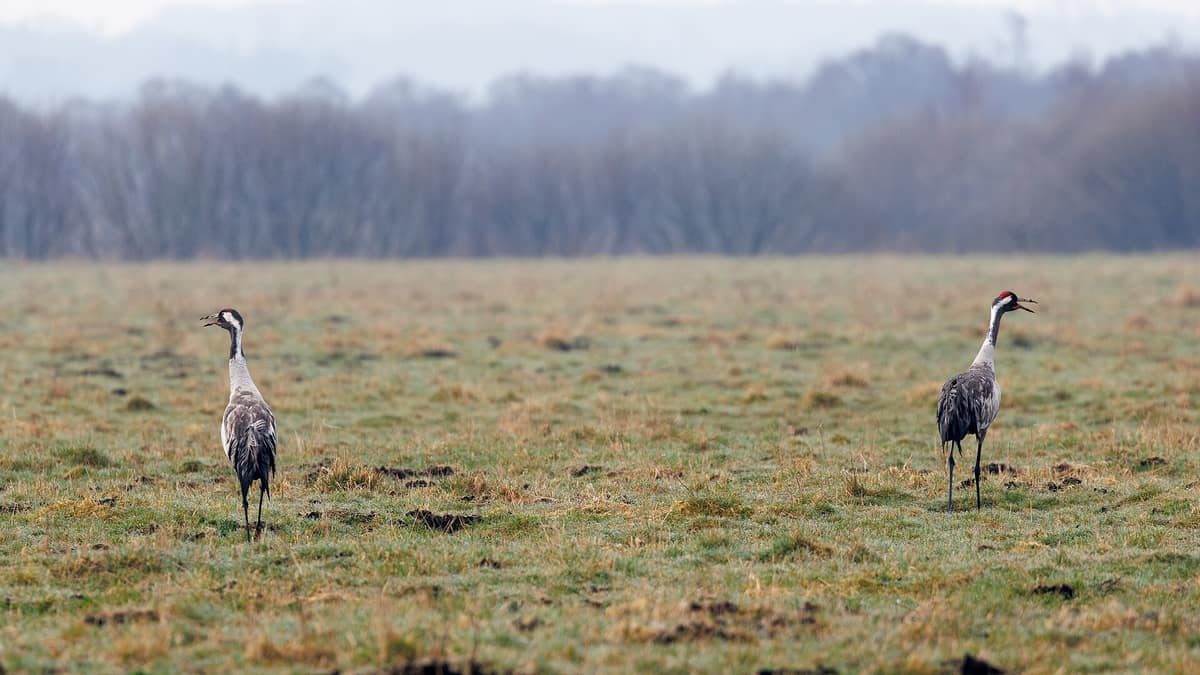
The bog transforms with the seasons. In winter Whooper swans arrive, and at dusk large flights of swans, wild geese and corvids gather to roost on Lake Tofte, reversing direction at daybreak. Hen harriers and great grey shrikes course over the heather. In May common cranes trumpet, and from Brandvagtstårnet the resonant booming of the Eurasian bittern echoes through the reedbeds. In summer, moose wade into flooded cuttings. In September and October the red deer rut peaks, and the Tofteskov viewing tower provides close views of stags roaring and clashing.
Mammals include red deer, wild boar, Eurasian otters, red foxes and roe deer. The Moose returned through individuals translocated from Sweden: five calves arrived in November 2015, and subsequent releases in 2016-17 brought the total in Mellemområdet to ten animals. The European bison, absent from Denmark for thousands of years, was reintroduced to Tofte forest. Wolves and golden jackals, migrating naturally into Denmark from Germany, have been documented in the reserve since 2021 and 2016.
Above, the Golden eagle and the White-tailed eagle breed in the reserve. Lake Tofte supports a cormorant colony active from March through autumn, and a sea eagle or golden eagle can be spotted hunting almost daily. At Lake Birkesø, restored in December 2017, artificial islands offer nesting refuges while shallow waters provide feeding grounds for Eurasian spoonbills.
Species
With a page in the atlas
Being mentioned in a source doesn't guarantee sightings: check with the people who manage the area.
Memory and protection
History and conservation
Restoration hinges on the reintroduction of large native herbivores. The moose, which disappeared from Denmark approximately 4,500 years ago, was chosen as surrogate megafauna to replace livestock grazing, with ten individuals released from Swedish stock. Lille Vildmose was designated a Ramsar site on 18 May 2013, and the woodlands of Høstemark and Tofte remain fenced to secure the large grazers, accessible only on guided excursions.
Rewilding projects
Before you set off
Visiting
How to visit
Begin at the visitor centre, located at the heart of the reserve: it features interactive exhibits on peat ecology, wildlife and mire history, alongside a cinema. At reception you can collect a map for self-guided exploration, and Mellemområdet remains open free of charge around the clock throughout the year. The visitor centre operates its own seasonal opening hours. From there you can head towards Lake Birkesø and its covered viewing pavilion.
Observation towers provide premier vantage points. Brandvagtstårnet overlooks flooded peat trenches; Rovfugletårnet looks out across the eagle feeding station, accessible via a boardwalk from the Ny Høstemarkvej car park with excellent chances of close encounters with moose and deer. The Nordsøstien hiking path skirts Tofte Mose, while another trail leads from the western car park across Portlandmosen to the base of the Kællingbjerg cliff.
The Toftesø tower stands just 100 metres from the Mellemområdet car park via a path through the gate fence, overlooking the open lake. For restricted areas, the visitor centre arranges guided vehicle and walking excursions into the fenced forests.
Before you go
Never step off the wooden boardwalks onto the bog: it is deeply saturated and treacherous. Maintain at least 50 metres distance from large wild animals. Dogs on leash are permitted in outdoor areas around the centre, but smoking is strictly prohibited across Lille Vildmose due to severe wildfire risk. The towers at Toftesø and Tofte, and the Portlandmose boardwalk, are wheelchair accessible. Best visiting window: May to October.
Check access, rules and visiting conditions in the official information from the managing body before you set off.
Location
Where it is and how far it reaches
Boundary of Lille Vildmose · IUCN II · © EEA, CDDA (CC-BY) The coordinate is estimated; it isn't a verified access point.
Transparency
Sources
The research data with its sources, and the official links for this place, are in the Spanish version of this page. See the Spanish version
Around it
Lille Vildmose has no immediate neighbours in the atlas, but shares habitats and species with distant counterparts. Parque Nacional de Store Mosse shares vast wetlands, moose and white-tailed eagle; Parque Nacional de Soomaa shares moose and golden eagle; and both Parque Nacional de Biebrza and Parque Nacional de Ķemeri share extensive wetlands, moose and white-tailed eagle.
Entry #602 of the original atlas.