Kopački Rit Nature Park
Park prirode Kopački rit
Osijek-Baranja County (Confluence of the Drava and Danube) · Croatia
Photo: Misalalic · CC BY-SA 4.0 · Wikimedia Commons
The 'Amazon of Central Europe', the largest intact river floodplain in the Danube and Drava basin.
A river forming a delta without ever reaching the sea. In its middle reaches, the Danube, joined by the Drava, crafts an «inland delta», giving Kopački Rit global conservation significance. The result is a wetland described by the park as one of the best-preserved floodplains in Europe: lakes, canals, pools, flooded forests, reedbeds, and wet meadows that morph each year depending on the rise and fall of the water. It covers 231 km², featuring a 71 km² special zoological reserve protected since 1967.
What makes it unique
An inland delta of the Danube where water sculpts the landscape and where the largest white-tailed eagle breeding population in the Danube basin nests.
The place
Nature
The landscape
Life in the Rit hinges entirely on water pulses. Flooding begins in late February or early March and lasts until mid-July or early August; the dry period runs from August to February. The largest lake is Kopačko and the deepest is Sakadaško, bound together and linked to the Danube and Drava by a network of natural channels.
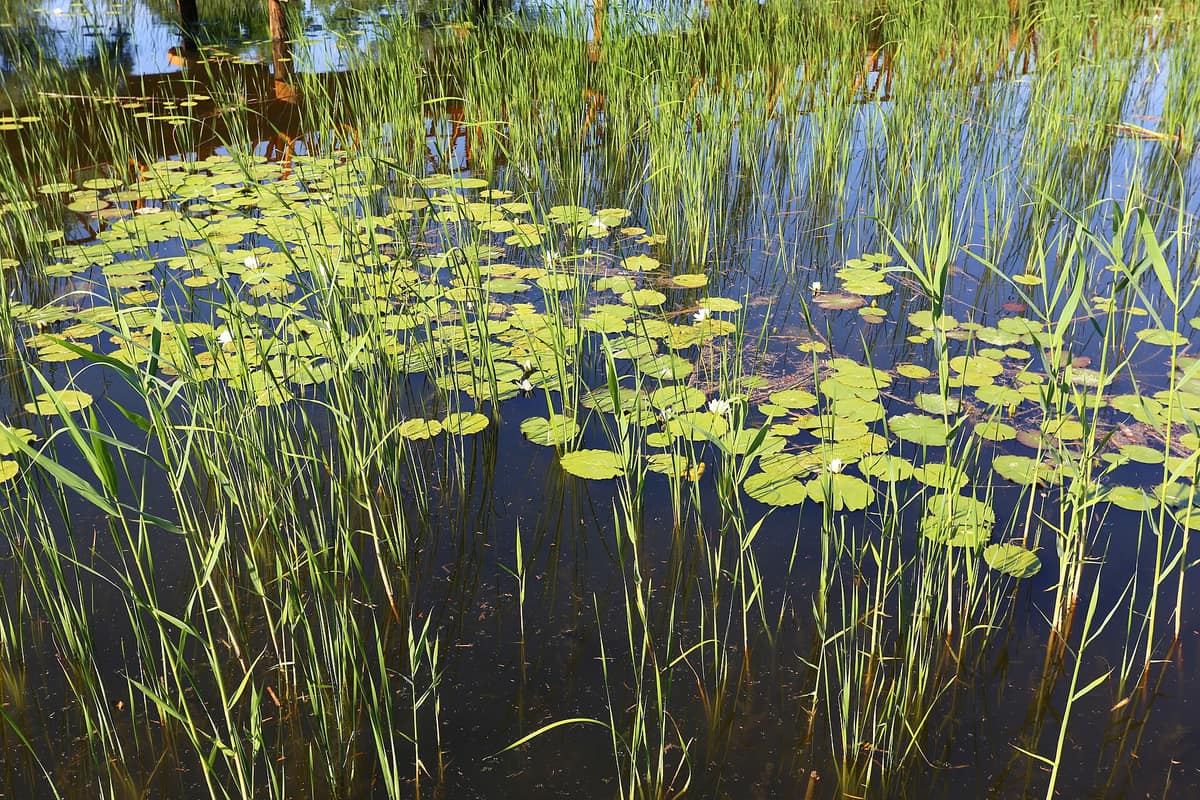
Water carves the topography: leaving depressions (sloughs) and narrow, curving ridges (crests) stretching hundreds of metres. This mosaic dictates what grows where. Most of the floodplain is blanketed by white willow woodlands; slightly higher ground supports white willow and black poplar, and the highest ground bears pedunculate oak forests. Seasonally flooded zones are dominated by reedbeds and tall sedges. The park contains 25 habitat types, five of which are endangered across Europe. Notable plants include white water lilies and Iris variegata, within a flora list exceeding 500 species.
Wildlife and seasons
More than 2,300 species have been recorded to date, many threatened in Europe and worldwide. Birds reign supreme: 300 species, representing 80 % of all birds recorded in Croatia, with over 140 nesting regularly or occasionally. Kopački Rit boasts the highest concentration of nesting white-tailed eagle in this part of Europe and Croatia's largest colonies of cormorants and grey heron. Other birds nesting in massive colonies include grey herons, whiskered terns, great cormorants, and black-headed gulls, alongside both white stork and black stork.
The seasons set the tempo. The highest diversity occurs during spring and autumn migrations; in winter, tens of thousands of geese and ducks arrive from western Siberia. During a single visit you can typically see around 70 % of the species present, between 35 and 63 per day; the record for a single day stands at 93.
Mammals number 55 species, more than half of Croatia's total: red deer, roe deer, wild boar, European wildcat, Eurasian otter, Eurasian beaver, and badgers. The deer rut runs from early to mid-September, echoing far across the floodplains; deer swim exceptionally well, at times crossing the Danube, and spend summer hours wading to fend off insects. It is the greatest fish spawning ground in this stretch of the Danube, harbouring over 50 freshwater fish species, alongside 12 amphibian and 10 reptile species; European pond turtles bask on logs beside the water lily boardwalk.
Species
With a page in the atlas
Being mentioned in a source doesn't guarantee sightings: check with the people who manage the area.
Memory and protection
History and conservation
In 1699, Prince Eugene of Savoy was granted the Belje estate, which encompassed Kopački Rit, and built a hunting manor in Bilje. The nineteenth century Tikveš complex was constructed by the Teschen branch of the Habsburgs in the heart of Baranja; today the Tikveš Presentation and Education Centre occupies the renovated palaces, housing an interactive nature interpretation centre and educational spaces.
In 1941, Prince Albrecht of Habsburg founded the «Albertina» biological station; in 1967 Kopački Rit was designated a managed nature reserve, and in 1997 the public institution running the park was founded. It has been on the Important Bird Areas list since 1986, became a Ramsar wetland in 1993, and forms part of the transboundary Mura-Drava-Danube Biosphere Reserve proclaimed by UNESCO in 2012.
Conservation networks
Before you set off
Visiting
How to visit
You can visit year-round, though the best periods are from April to June and from August to October. The educational White Water Lily boardwalk spans about 1200 m from the visitor centre to the Sakadaš boat landing, offering an easy 20-minute stroll with interpretive panels on local plants and animals and several rest stops.
During high-water periods, boat excursions venture into the special zoological reserve; during drier months, tours focus on the ancient floodplain forests. The official boat tour lasts about 45 minutes and requires booking with the park, as does the canoe tour from Sakadaš lasting one or two hours. The international «Pannonian Peace Route» and «Danube Route» cycle ways cross Kopački Rit, and bicycles can be hired at the visitor centre.
Before you go
Visitors may only move along designated trails and zones; picking or damaging plants and fungi or disturbing wildlife is prohibited. Regular excursion boats depart from the Kopačevo reception centre; departure schedules vary with the season. Guided evening outings to listen to the deer rut are not offered every year.
Check access, rules and visiting conditions in the official information from the managing body before you set off.
Location
Where it is and how far it reaches
Boundary of Kopački rit · © EEA, CDDA (CC-BY) The coordinate is estimated; it isn't a verified access point.
Transparency
Sources
The research data with its sources, and the official links for this place, are in the Spanish version of this page. See the Spanish version
Around it
Béda-Karapancsa Floodplain lies 2 km away, and the Dráva River & Floodplain is 19 km away. Further afield, Kiskunsági Nemzeti Park - Apaji-szikesek shares whiskered terns and expansive wetland dynamics.
Entry #148 of the original atlas.