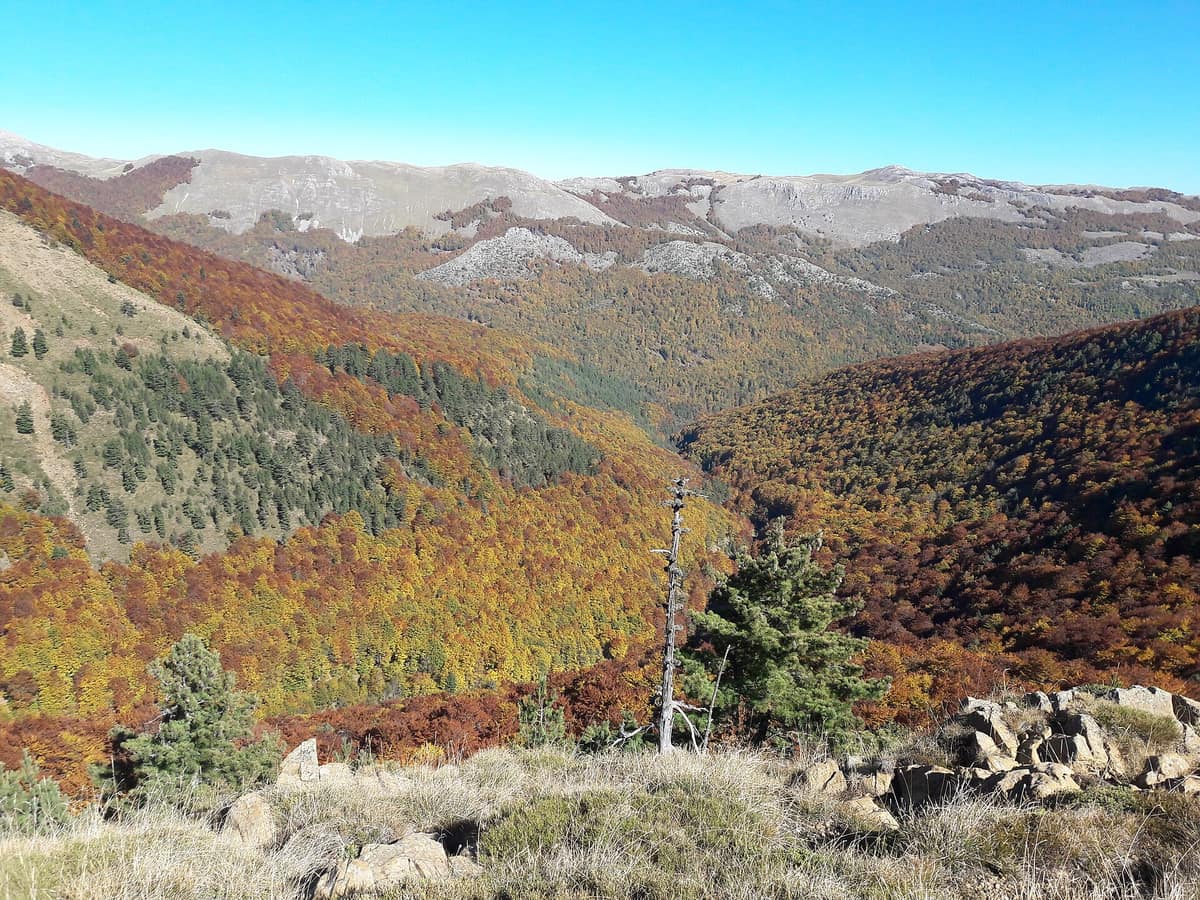
Shebenik-Jabllanicë National Park - Rrajcë Primeval Forest
Parku Kombëtar Shebenik-Jabllanicë - Pylli primar Rrajcë
Elbasan County (Librazhd) · Albania
Photo: Albertkaleci · CC BY-SA 4.0 · Wikimedia Commons
Primeval mountain beech forest on the border between Albania and North Macedonia, a UNESCO site.
On 21 April 2011, a research team obtained the first photograph of a living Balkan lynx inside this park. Since then, the lynx has been its most iconic animal, though it remains critically endangered. The park covers some 34,507.9 hectares of eastern Albania, directly bordering North Macedonia, and protects within its borders the best-preserved ancient beech stands with primeval forest character: those of Rrajcë, inscribed as a UNESCO World Heritage Site in 2017.
What makes it unique
The oldest forests in the park remain ancient because they are practically inaccessible: the upper Bustrica Valley is exceptionally remote and rugged.
The place
Nature
The landscape
The name unites two massifs, Shebenik and Jabllanica, with elevations plunging from more than 2,200 m down to 300 m. The mountains originated during the Variscan orogeny and consist largely of ultramafic and metamorphic rocks. Subsequent glaciers during the last ice age carved U-shaped valleys, cirques, and tarns. Today there are 14 glacial lakes, the highest lying between 1,500 and 1,900 m. The Qarrishte and Bushtrice rivers, each 22 km long, rush through the park, and average annual rainfall ranges from 1,300 to 1,800 mm depending on exposure.
Forest dominates the landscape. Beech, fir, pine, and oak carpet the park, while northern slopes shelter purple willow, Norway maple, birch, and silver fir. Pines include Bosnian pine and Macedonian pine, though beech is consistently the most plentiful. On the steep slopes of Rrajcë, beech mingles with fir and Balkan pine, alongside thermophilous oak relicts reflecting Mediterranean influences. The understorey consists of shrubs such as flowering ash, hazel, and prickly juniper.
Wildlife and seasons
The park harbours about 30 mammal species, with the critically endangered Balkan Eurasian lynx as its flagship resident. Red fox and grey wolf are observed frequently; the brown bear less often. In Rrajcë you also find wildcats, the Eurasian otter, and chamois. There are also 18 bat species, including three horseshoe bat species.
Birds add another dimension: more than 88 species have been recorded. Among them are the golden eagle, western capercaillie, and hazel grouse; peregrine falcons breed on crags and cliffs. Amphibians and reptiles (10 species of the former and 15 of the latter) include smooth snakes, grass snakes, and Hermann's tortoise.
Species
With a page in the atlas
Being mentioned in a source doesn't guarantee sightings: check with the people who manage the area.
Memory and protection
History and conservation
The forests of Rrajcë were inscribed in 2017 into the UNESCO World Heritage Site Ancient and Primeval Beech Forests of the Carpathians and Other Regions of Europe, with the protected site occupying some 2,129.45 hectares of the park. In January 2022 the national park was expanded to its present 34,507.9 hectares, managed by an administration based in Librazhd and Prrenjas.
Conservation challenges are real: illegal logging and the need for a comprehensive sustainable management plan. Fauna has suffered historical losses, with species like the lynx, wildcat, otter, and mountain trout drastically reduced. Work continues to develop sustainable ecotourism to safeguard the ecosystem.
Before you set off
Visiting
How to visit
This is a park designed to be explored on foot. There are mountain hikes and trails leading up to the glacial lakes. If you want a map or brochure of marked trails, you should stop beforehand at the Librazhd Forestry Directorate. Tourism is still in its earliest stages: visitors are few and must be self-sufficient. May to October is the recommended visiting window.
Highlights worth a detour include the village of Llange with its three-storey stone houses; the church of Koshorisht, built inside a cave; and the karst lakes of Shebenik. Larger villages celebrate traditional festivals featuring local dress, songs, and dances.
Before you go
Visitors are few and must travel independently, so pick up a trail map or guide at the Librazhd Forestry Directorate beforehand. The primeval beech forest of the Bustrica Valley is exceptionally remote and difficult to access.
Check access, rules and visiting conditions in the official information from the managing body before you set off.
Location
Where it is and how far it reaches
Boundary of Shebenik · IUCN II · © EEA, CDDA (CC-BY) The coordinate is estimated; it isn't a verified access point.
Transparency
Sources
The research data with its sources, and the official links for this place, are in the Spanish version of this page. See the Spanish version
Around it
About nineteen kilometres away lies Parque Nacional de Galičica and about twenty kilometres away is Parque Nacional de Mavrovo, both in North Macedonia, just across the border.
Entry #76 of the original atlas.