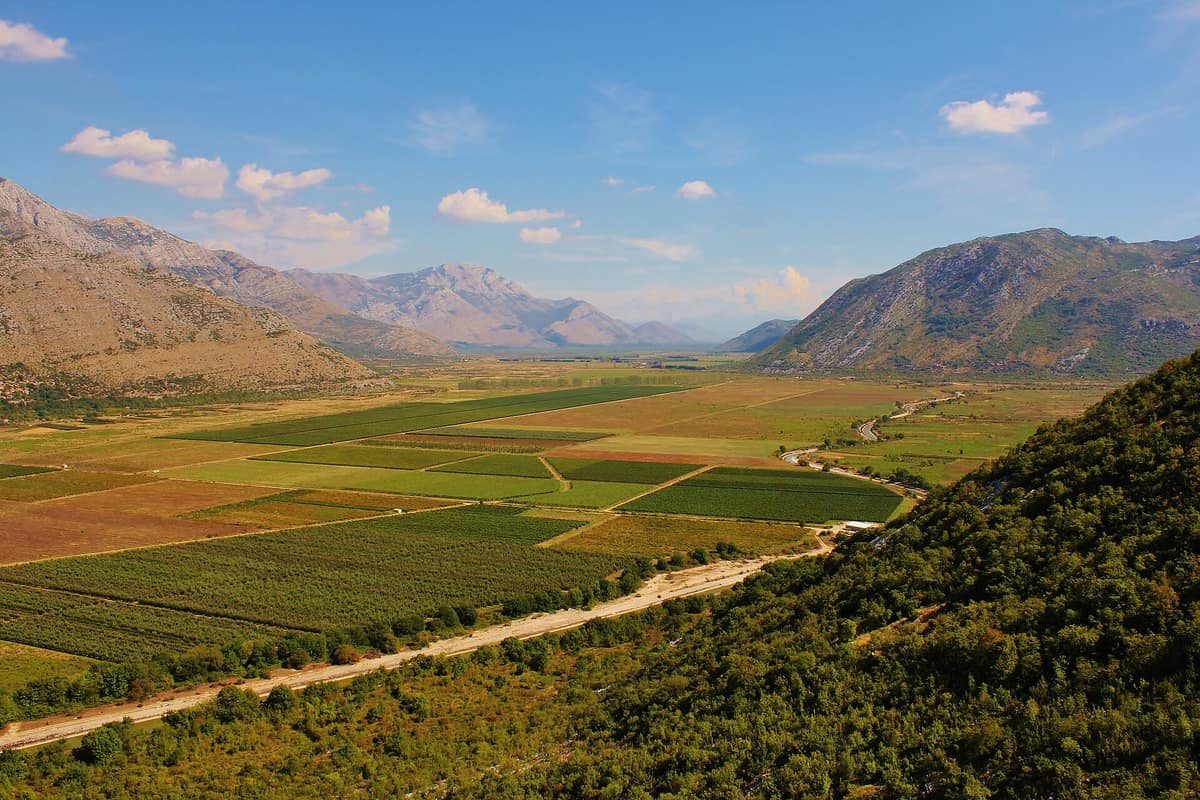
Popovo Polje and Vjetrenica Cave Hydrokarstic System
Popovo polje - Pećina Vjetrenica
Herzegovina (Ravno / Trebinje) · Bosnia and Herzegovina
Photo: Igor Trklja · CC BY-SA 3.0 · Wikimedia Commons
The cave with the highest subterranean biodiversity in the world (Vjetrenica, UNESCO World Heritage in 2024) and one of the largest floodable poljes in the Balkans.
In midsummer, across a barren limestone landscape, scorching and arid, an icy breath of air streams from the ground. This is the mouth of Vjetrenica, the 'wind cave', in the southernmost reaches of Bosnia and Herzegovina. Opening at the edge of Popovo Polje at 260 metres altitude, a mere 12 km as the crow flies from the Adriatic, it is the world's richest cave in subterranean biodiversity: nearly 230 recorded species, 37 of which were described here for the very first time. In 2024 it was inscribed as a UNESCO World Heritage site.
What makes it unique
A cave with 93 species that live exclusively underground, the world's only subterranean tube worm, and a wind that reverses direction with the seasons.
The place
Nature
The landscape
Popovo Polje ranks among the grandest poljes on Earth, predominantly shaped by the Trebišnjica, the longest sinking river on the planet. The valley is riddled with ponors, and the climate is Mediterranean, marked by hot, dry summers. Before hydraulic engineering, colossal volumes of water inundated the polje between October and June; today power stations and the Trebišnjica's concrete channel regulate discharge, draining excess waters in winter and irrigating fields in summer.
Beneath this floor, the rock consists of near-pure calcite: the limestones of Popovo Polje reach up to 99.98 percent, rendering them exceptionally soluble. Hence such an elaborate cave came to be. Vjetrenica forms an integral part of the Trebišnjica river system, with 7,014 metres of karstic channels surveyed, featuring four subterranean watercourses and over ten minor intermittent streams feeding subterranean lakes. The internal temperature remains constant at around 11.6 °C.
The wind has a clear physical explanation. Deep fractures penetrate above the cave through which warm air is drawn in summer, cooling as it sinks and blasting outward through the entrance; in winter, when outside temperatures plunge below those within, the airflow reverses direction. The name stems directly from this draught.
Wildlife and seasons
Its fauna forms the headline attraction. Nearly 230 species have been documented: 180 animals, 14 fungi, and 35 protists, of which 93 are obligate troglobites. Vjetrenica is the exclusive home of the world's only subterranean tube worm, Marifugia cavatica, and the sole freshwater hydrozoan inhabiting subterranean waters exclusively, Velkovrhia enigmatica. Nine species of subterranean amphipods belonging to the genus Niphargus occur here, possibly representing the highest subterranean diversity of any single genus. Several taxa are relicts from the Tertiary or earlier, regarded as living fossils. The olm figures among the featured species.
The cave can be visited almost year-round, operating on seasonal timetables from March to May, June to August, during September, October to November, and December to February. The ideal season spans May to October.
Species
With a page in the atlas
Being mentioned in a source doesn't guarantee sightings: check with the people who manage the area.
Memory and protection
History and conservation
Human presence in the cave dates back some 8000 years, with an engraved drawing originating twelve thousand years before Christ. In 1582 Jakov Sorkočević noted that local inhabitants believed nymphs, the vile, dwelled within and held midnight dances there. Czech speleologist Karel Absolon made the most groundbreaking discoveries between 1912 and 1914, while Mihajlo Radovanović published its scientific description in 1929. In a lower gallery, a complete leopard skeleton was uncovered.
Since 1952 the cave has been protected as a natural monument, and in 1965 it was designated a special geological reserve. In 2024, the World Heritage Committee inscribed it during its 46th session. The village of Zavala, with its stone vernacular architecture, forms alongside the cave a natural and architectural ensemble currently undergoing designation as a national monument; its monastery is first referenced in historical records in the sixteenth century.
Before you set off
Visiting
How to visit
The guided tour covers the developed section, consisting of 1,050 electrified metres, and lasts 40 to 60 minutes. You pass the 'Turkish Cemetery', a cluster of stalagmites resting on clay reminiscent of Muslim tombstones, and the tourist trail concludes at Hajdučki stol, a man-made stone table and seats. Beyond, at the siphon, the ceiling drops to 120 cm; in winter the cave floods completely here, barring further progress. At the Great Lake, stretching 180 metres, lies the cave's largest expanse of open water.
With advance notice up to the day before, visiting arrangements can be tailored. Admission includes access to the Biospeleological Museum. There is another enticing way to experience the polje: cycling tours follow the narrow-gauge Ćiro railway line and country tracks across Popovo Polje alongside a local guide, requiring reservation one day in advance.
Before you go
Wear long trousers and sturdy footwear, avoiding flip-flops or slippery soles. Stay close to the guide and never wander away from the group. Do not discard rubbish or remove any objects from the cave: it is a highly delicate protected ecosystem. The visit is not recommended for children under 4 years of age, individuals with claustrophobia, or anyone with limited mobility. The cycling excursion is discouraged for children under 10 years old.
Check access, rules and visiting conditions in the official information from the managing body before you set off.
Location
Where it is and how far it reaches
Boundary of Vjetrenica-Popovo Polje · IUCN V · © EEA, CDDA (CC-BY) The coordinate is estimated; it isn't a verified access point.
Transparency
Sources
The research data with its sources, and the official links for this place, are in the Spanish version of this page. See the Spanish version
Around it
Far from here, the Classical Karst and Postojna-Planina Cave System shares with Vjetrenica the karst, wetlands, and the olm.
Entry #459 of the original atlas.