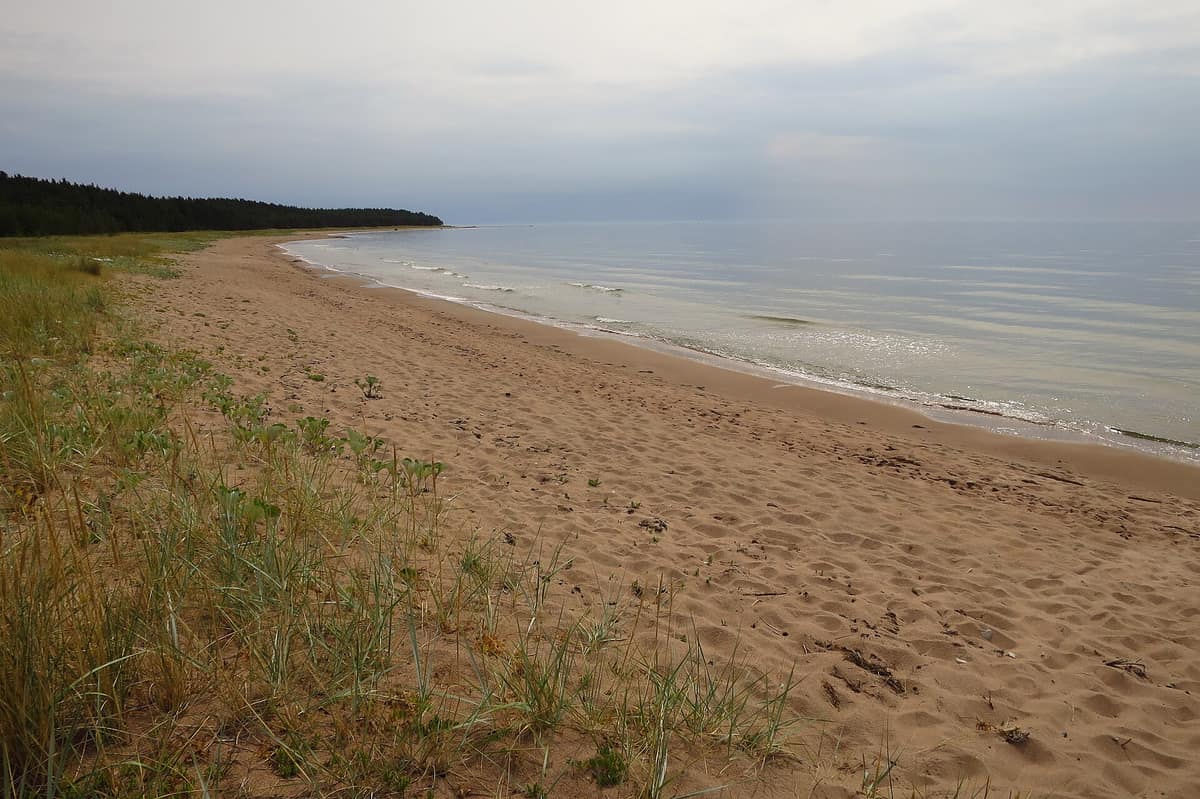
Kõpu Nature Reserve
Kõpu looduskaitseala
Hiiu — Kõpu Peninsula, Hiiumaa · Estonia
Photo: Marko Vainu · CC BY-SA 4.0 · Wikimedia Commons
Coastal dune forests, ancient fossil bluffs, and calcareous spring fens on Western Estonia's oldest landmass.
Some 8000 years ago, where a continuous maritime forest now thrives, only an isolated islet of one square kilometre poked above the Baltic waves. Such is the primordial origin of the Kõpu Peninsula, the oldest geological landmass of western Estonia, and the nature reserve guarding it across Hiiumaa: 3064 ha of dune forests, ancient sea scarps, and calcareous spring seepages. The peninsula extends roughly 21 km in length and up to 7,3 km across, terminating westwards at Cape Ristna beneath two historic beacons: the Kõpu and Ristna lighthouses.
What makes it unique
At Neljateeristi you walk through coastal woodland separating an ancient fossil sea cliff from today's shore, spanning eight millennia of geological uplift.
The place
Nature
The landscape
Post-glacial rebound caused the seabed to rise steadily as maritime waters retreated, leaving distinct morphological terrace steps across the terrain. At the core of the peninsula swells the Kõpu plateau, culminating at Tornimägi, which at 68 metres marks the highest natural elevation in the Western Estonian Archipelago. Stately coastal dunes known as the Rebastemäed flank ancient littoral scarps and massive glacial erratics: the Mägipe boulder and the beach-side Süllasoo Jaanikivi stand as monumental relics of the ice age. Coniferous woods shroud most of the peninsula, sheltering relict European yews and Atlantic plant species.
Forest associations shift dramatically with the underlying topography. At Rebastemäe, the trail winds through dry pine groves on dune crests, lush deciduous stands at the foot of fossil scarps, and primeval spruce stands strewn with storm-felled deadwood. In these old spruce groves grows the rare evergreen dwarf shrub Linnaea borealis (harilik harakkuljus). Beneath the northern coastal bluffs lies Möirasoo, a unique calcareous spring fen steeped in local folklore. Conservation zoning protects undisturbed old-growth core sectors across northern parts of the reserve.
Wildlife and seasons
Botanical treasures define the reserve's primary natural interest: strictly protected European yews surviving from a warmer mid-Holocene climatic epoch, discoverable along the Neljateeristi trail, and creeping evergreen shrubs of old spruce groves. These Atlantic yew populations offer living testimony to prehistoric warmer climates.
Memory and protection
History and conservation
Historical residents of the peninsula were traditionally called törvaköplased; literally, the tar burners and merchants who distilled pine resin in forest charcoal pits.
Before you set off
Visiting
How to visit
Two state forest (RMK) interpretive nature trails and a visitor centre welcome hikers. The Rebastemäe trail covers 1,5 km. At Kaplimäe, Hiiumaa's second-highest summit at 63,5 m, and on Rebastemäe, observation towers provide panoramic vistas sweeping over canopy and open sea. At Kaplimäe you can discover the folklore of the ancient wooden chapel. The trail features eight small information boards in Estonian and English, one large trail-head board, timber staircases, and two scenic lookout platforms, marked with wooden arrows and blue trail blazes. A dedicated parking bay sits along the main highway.
Neljateeristi is a scenic loop of approximately one hour winding between post-glacial scarps and mineral spring wetlands. It follows the peninsula's northern coast, through quiet woods dividing an 8000-year-old fossil cliff from the contemporary shoreline.
The Ristna Visitor Centre is situated in Kalana village, sheltered in peninsular woodland within a century-old former forester's residence. It supplies comprehensive guidance on Hiiumaa and RMK recreational zones. The main lodge hosts rotating exhibitions, while the heritage garden introduces local herbs before leading out to a forest heritage trail.
Before you go
All paths lie within the Kõpu Nature Reserve: consult official protection rules and check local seasonal restrictions with the Environmental Board (Keskkonnaamet). Route details and zoning rules are accessible on RMK portals. The Rebastemäe nature loop requires about one hour to complete.
Check access, rules and visiting conditions in the official information from the managing body before you set off.
Location
Where it is and how far it reaches
Boundary of Kõpu looduskaitseala · © EEA, CDDA (CC-BY) The coordinate is estimated; it isn't a verified access point.
Transparency
Sources
The research data with its sources, and the official links for this place, are in the Spanish version of this page. See the Spanish version
Around it
The scenic Käina Bay and Kassari Landscape Conservation Area lies around twenty-five kilometres to the east.
What else to explore nearby
Approximate straight-line distance between the edges of each area. It doesn't indicate access, routes or driving times.
- Käina Bay and Kassari Landscape Conservation Area
Hiiu — Käina and Vaemla bays and Kassari Island
About 25 km away
Brackish coastal bays and semi-natural alvar meadows with observation platforms at Orjaku.
JFMAMJJASONDMarch – May · September – November · Crowding no data
Entry #1067 of the original atlas.