Munzur Valley National Park
Parque Nacional del Valle de Munzur
Eastern Anatolia (Tunceli / Ovacık) · Türkiye
Photo: Zgcnkygsz · CC BY-SA 4.0 · Wikimedia Commons
Turkey's most extensive and biodiverse national park (42,000 ha), featuring deep karst canyons, sacred springs, and herds of wild bezoar ibex.
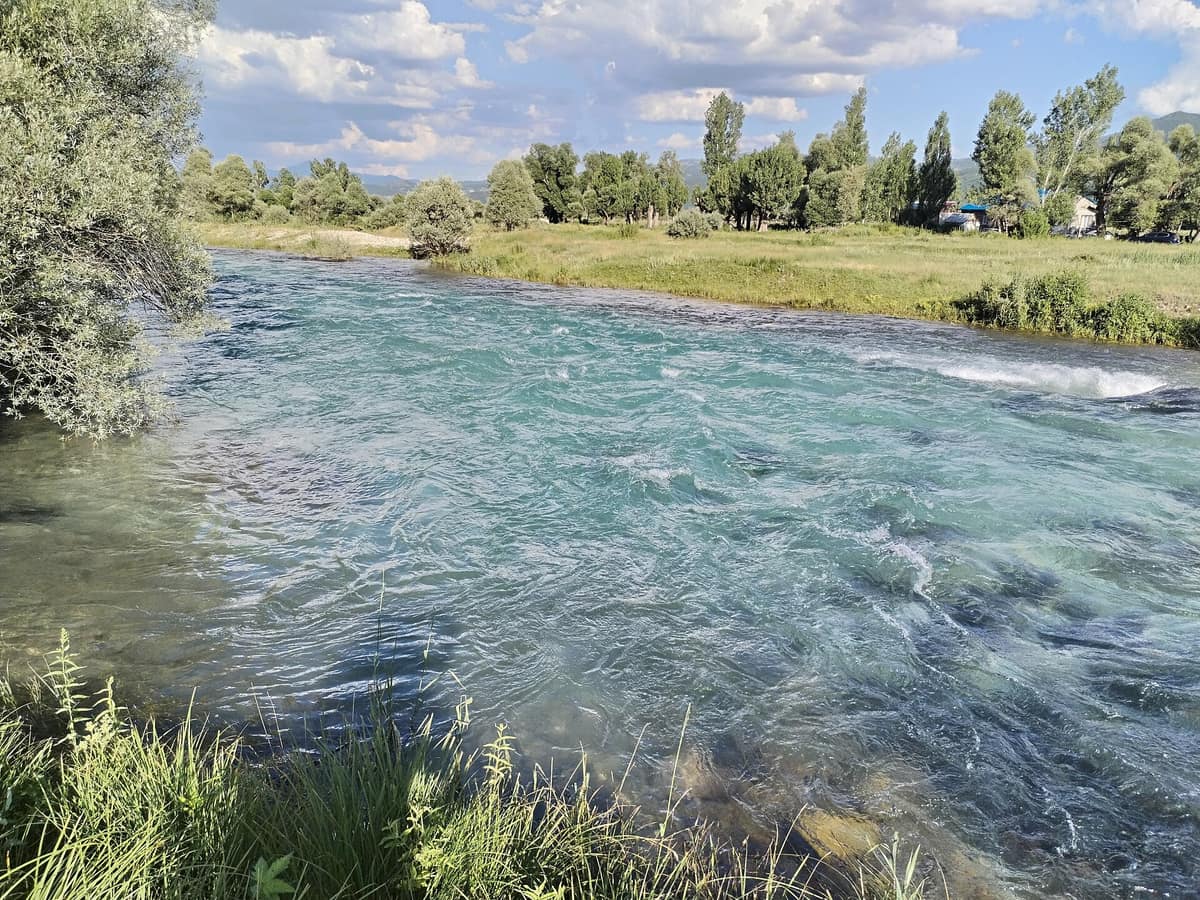
Water bursts forth here with sudden power. Near the village of Ziyaret, some ten to fifteen kilometres west of Ovacık, the Munzur erupts from the earth through monumental resurgences and, already a mighty river, carves through the Munzur Mountains before eventually meeting the Euphrates. Munzur Valley National Park embraces this dramatic course: from sacred springs to sheer canyons, and from valley-bottom oakwoods to rugged peaks reaching 3300 m, dotted with glacial tarns and crater lakes, home to herds of wild mountain goats and brown bears denning in natural limestone caverns.
What makes it unique
A river born of gushing springs, a valley where oak woods shelter birches exceedingly rare in Turkey, and endemic flora found nowhere else on Earth.
The place
Nature
The landscape
The national park begins 8 km outside the centre of Tunceli and follows the river valley all the way to Ovacık. To the north, the Munzur Range rises steeply to 3300 m, heavily incised by the gorges of the Mercan and Munzur rivers. Across the high crests, between 2000 and 3000 m, lie dramatic crater and cirque lakes; on the plains of Ovacık gush the river springs; and throughout the valley stretch gorges, vertical precipices, and waterfalls. Karagöl ranks among the prominent glacial lakes nestled in these heights. Subterranean conduits riddle the karst, though few of the caves have been explored systematically.
The climate is strictly continental, marked by fierce winters and heavy snowfall.
Vegetation mirrors the dramatic topography. Oak is the dominant forest tree, cloaking slopes and hillsides wherever rock gives way to soil. Along the riverbanks and valley floors mingle elm, maple, alder, ash, plane, wild grapevine, birch, walnut, wild hazel, poplar, and willow. Just 1.5 km downstream from the Munzur springs thrives a native birch grove along both banks, an exceptionally rare tree in Turkey that forms a signature ecological feature of the region.
Wildlife and seasons
Botany is the park's foremost treasure: 1518 plant species documented, of which 43 are strictly endemic to the Munzur Mountains and 227 endemic to Turkey. Among botanical species growing nowhere else on the planet are the Munzur snowcock pea, the Erzincan cherry, and local endemic violets.
Mammalian fauna features the brown bear, sheltering in caves and rock fissures as one of the park's flagship species. Also roaming these mountains are the wolf, Eurasian lynx, Eurasian otter, wildcat, Eurasian badger, wild boar, and wild goat, represented by two distinct caprid species: the hook-horned wild goat and the bezoar ibex, coexisting alongside the chamois.
Avian life includes eagles, vultures, falcons, and kites, alongside the rare golden eagle. Vulnerable and protected birds regularly logged include black stork, bearded vulture, Egyptian vulture, griffon vulture, Caspian snowcock, eastern imperial eagle, and wallcreeper. At night, the Eurasian eagle-owl, smaller owls, and bats are common. In the cold mountain streams, brown trout thrive in both the Munzur and Mercan, with the Munzur springs harbouring red-spotted trout.
Owing to high-mountain weather, the optimal window for exploration runs from 15 June to 27 August.
Species
With a page in the atlas
Being mentioned in a source doesn't guarantee sightings: check with the people who manage the area.
Memory and protection
History and conservation
The national park was officially proclaimed on 21 December 1971, administered by the General Directorate of Nature Conservation and National Parks. The sacred traditions, spiritual beliefs, and folklore of the valley communities are recognized as integral cultural values of the park; the local Alevi population reveres nature as an inseparable aspect of spiritual devotion, an ethic that has helped safeguard the wilderness.
Ecological pressures have emerged from hydrological schemes. In 1985 construction began on a hydroelectric dam along the Mercan River, subsequent legal investigations confirming that portions of the reservoir fell directly inside national park boundaries.
Before you set off
Visiting
How to visit
Access from Tunceli is via an asphalt road tracking the course of the Munzur River towards Ovacık. Within the park, the northern reach of the Mercan Valley provides the most rewarding terrain for trekking and mountain hiking, whereas the wooded southern sectors are favoured for camping and riverside day use.
Halbori Gözeleri and Ana Fatma constitute the primary visitor nodes along the river. In the Ana Fatma day-use area, a park administration and visitor interpretation facility welcomes travellers.
Before you go
High elevations bring extreme winter conditions, keeping the seasonal window narrow. Check current accessibility and open sectors with the park administration before organizing excursions.
Check access, rules and visiting conditions in the official information from the managing body before you set off.
Location
Where it is and how far it reaches
Boundary of Munzur Vadisi Millî Parkı · © OpenStreetMap contributors (ODbL) The coordinate is estimated; it isn't a verified access point.
Transparency
Sources
The research data with its sources, and the official links for this place, are in the Spanish version of this page. See the Spanish version
Around it
Far across the eastern Mediterranean, in Crete, the Lefka Ori Massif and Samaria Gorge National Park share with Munzur the wild bezoar goat alongside rugged high-mountain and canyon habitats.
If you like this place, elsewhere in Europe
Distant places with uncommon wildlife and habitats in common. The most widespread species don't count. Sharing species doesn't imply a corridor or guaranteed presence.
- Samaria Gorge National Park - Crete
Crete Island (Chania / White Mountains - Lefka Ori)
In common: Wild goat — high mountain, gorge and canyon
The queen of Mediterranean gorges (16 km of sheer precipices), exclusive sanctuary of the Cretan wild goat (Kri-Kri).
JFMAMJJASONDMay – October · Crowding moderate
Entry #667 of the original atlas.