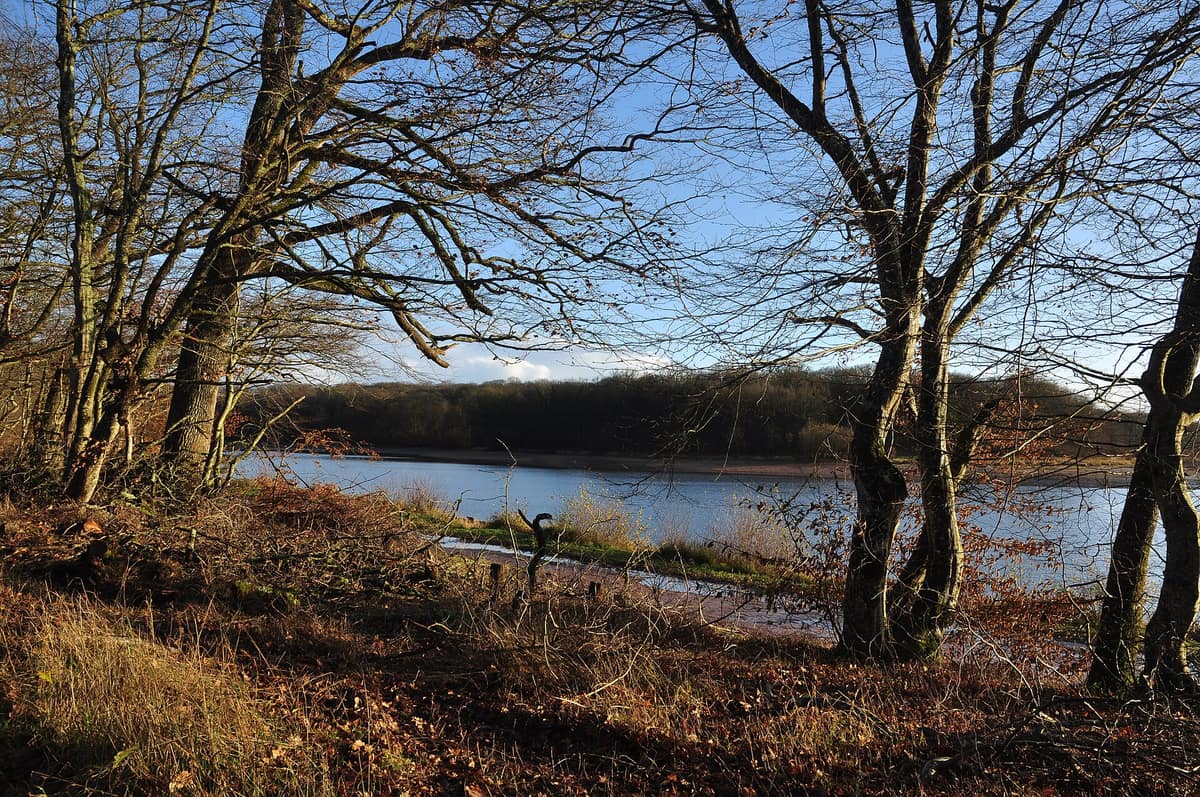
Tronçais Forest
Forêt de Tronçais
Auvergne-Rhône-Alpes (Allier / Cérilly) · France
Photo: Gérard JOYON · CC BY 3.0 · Wikimedia Commons
The most celebrated sessile oak forest in Europe, planted in the era of Colbert and preserving veteran trees over 400 years old.
In the seventeenth century, the forest hailed today as one of Europe's grandest and finest high oak woodlands lay in utter ruin. Indiscriminate felling without regard for the future had reduced it to degraded heaths grazed by livestock. Then entered Colbert: with his landmark forestry ordinance of 1669, he launched a multi-century management programme that created the Tronçais of today, nestled in the heart of the Bourbonnais bocage in the Allier: a magnificent forest of sessile oaks rising over forty metres, with veterans exceeding two hundred years of age.
What makes it unique
A cathedral oak forest, with trees soaring over 40 metres, owing its majesty to two centuries of disciplined silvicultural management.
The place
Nature
The landscape
Tronçais exhibits gentle topography without dramatic relief. The overall aspect of the massif slopes northwestward with mild inclines, except around the Bouteille massif and along entrenched stream gullies. The territory is divided into four sectors: l'Armenanche in the east, la Réserve in the centre, the Landes blanches in the northwest, and la Bouteille in the southwest. Varied landscapes encompass the gently rolling Aumance valley, the historic village of Hérisson, numerous streams and recreational ponds, young high forest stands, edges, and venerable veteran groves. Two rivers traverse the massif, the Marmande and the Sologne, accompanied by five ponds; across the woodland dwell nearly a hundred springs, many protected by historical stone masonry.
The current timber composition comprises sessile oak (81%), European beech (10%), and Scots pine (7%). Oak dominance is deliberate: foresters favoured it systematically over centuries for timber, and fine-grained Tronçais sessile oak remains world-renowned for cooperage, a pedigree demanding two hundred years of silvicultural expertise. Beech, kept secondary, reclaims ground in moister sectors, naturally dominating mixed beech-oak stands around Nantigny.
Wildlife and seasons
Ancient cavity trees are the ecological cornerstone. They shelter 21 bat species, roosting by day, including Bechstein's bat, Natterer's bat, and the brown long-eared bat, alongside nine specialist bird species tied to veteran timber, notably the black woodpecker, black stork, European pied flycatcher, and wood warbler. At Nantigny, middle spotted woodpeckers, grey-headed woodpeckers, booted eagles, and northern goshawks join the community. Among coleopterans, the stag beetle, great capricorn beetle, and extraordinarily rare jewel beetle Eurythyrea quercus stand out, endowing the Futaie Colbert with international importance for saproxylic invertebrates.
Nantigny also protects barbastelle bats, white-clawed crayfish and European bullhead in the Bouteille brook, alongside a substantial local population of red deer. Mycological wealth is extraordinary: 375 species of lignicolous wood-decay fungi have been identified, 24 of which possess high heritage conservation status. Among flora, royal fern flourishes in boggy alder carrs.
Species
With a page in the atlas
Being mentioned in a source doesn't guarantee sightings: check with the people who manage the area.
Memory and protection
History and conservation
Colbert surveyed the bounds with boundary stones while foresters inventoried timber stock, though eighteenth-century iron forges and peasant grazing undermined early gains. In 1832 Joseph Louis de Buffévent instituted an ambitious regeneration programme employing sustainable shelterwood logging, earning him recognition as the founding father of modern Tronçais forestry. Since 1835 it has been managed continuously as regular high forest. In 2018 it was formally designated a Forêt d'Exception.
Two integral biological reserves protect the most ancient groves. The Futaie Colbert derives from a historical artistic plot created in 1943, converted into an integral biological reserve in the 2010s; it remains closed to the public due to falling timber hazards. The Nantigny integral reserve, established in 2004, complements it: all silvicultural intervention ceased across one hundred hectares to monitor natural succession, remaining untouched since 1994 save for roadside safety pruning. The entire forest is designated as a Type 1 ZNIEFF inventory area.
Before you set off
Visiting
How to visit
The premier walking experience is the Colbert II trail. Inundated with character, opened in 2019 within the Buffévent high forest, it winds for almost 900 metres through veteran oakwood with seven interpretive stations explaining soils, resource history, and how nineteenth-century foresters restored the forest. Cyclists and equestrians can skirt the site via designated transverse forest roadways.
For effortless access, the accessible Saint-Bonnet path borders the pond through reedbeds, open glades, and woods, featuring a wooden tactile guide rope assisting visually impaired visitors toward a viewpoint, alongside wheelchair-compliant guardrails. Visitors can also admire the Chêne Stebbing, a monumental sessile oak designated among the forest's notable trees. Forestry rangers additionally recommend the historic dam at Saint-Bonnet-Tronçais pond for observing bird flight.
Before you go
The Futaie Colbert reserve is closed to the public; do not enter. Dead and decaying trees evolve under natural dynamics, and entry is restricted due to dangerous deadwood fall.
Check access, rules and visiting conditions in the official information from the managing body before you set off.
Location
Where it is and how far it reaches
Boundary of Forêt de Tronçais · © OpenStreetMap contributors (ODbL) The coordinate is estimated; it isn't a verified access point.
Transparency
Sources
The research data with its sources, and the official links for this place, are in the Spanish version of this page. See the Spanish version
Around it
Far away, the Sonian Forest and Cozia National Park - Ancient Beeches share the stag beetle and old-growth forest dynamics with Tronçais.
If you like this place, elsewhere in Europe
Distant places with uncommon wildlife and habitats in common. The most widespread species don't count. Sharing species doesn't imply a corridor or guaranteed presence.
- Sonian Forest / Zoniënwoud - Core Zones
Brussels / Flanders / Wallonia
In common: Stag beetle · European wildcat — old-growth forest
The 'Beech Cathedral', an ancient peri-urban forest at the gates of Brussels inscribed on the UNESCO list.
JFMAMJJASONDApril – October · Crowding moderate
- Cozia National Park - Primeval Woodlands
Vâlcea County
In common: Stag beetle · European wildcat
Limestone crags and the Olt River gorge cloaked in virgin beech forests and high-altitude oak groves.
JFMAMJJASONDMay – October · Crowding low
Entry #135 of the original atlas.