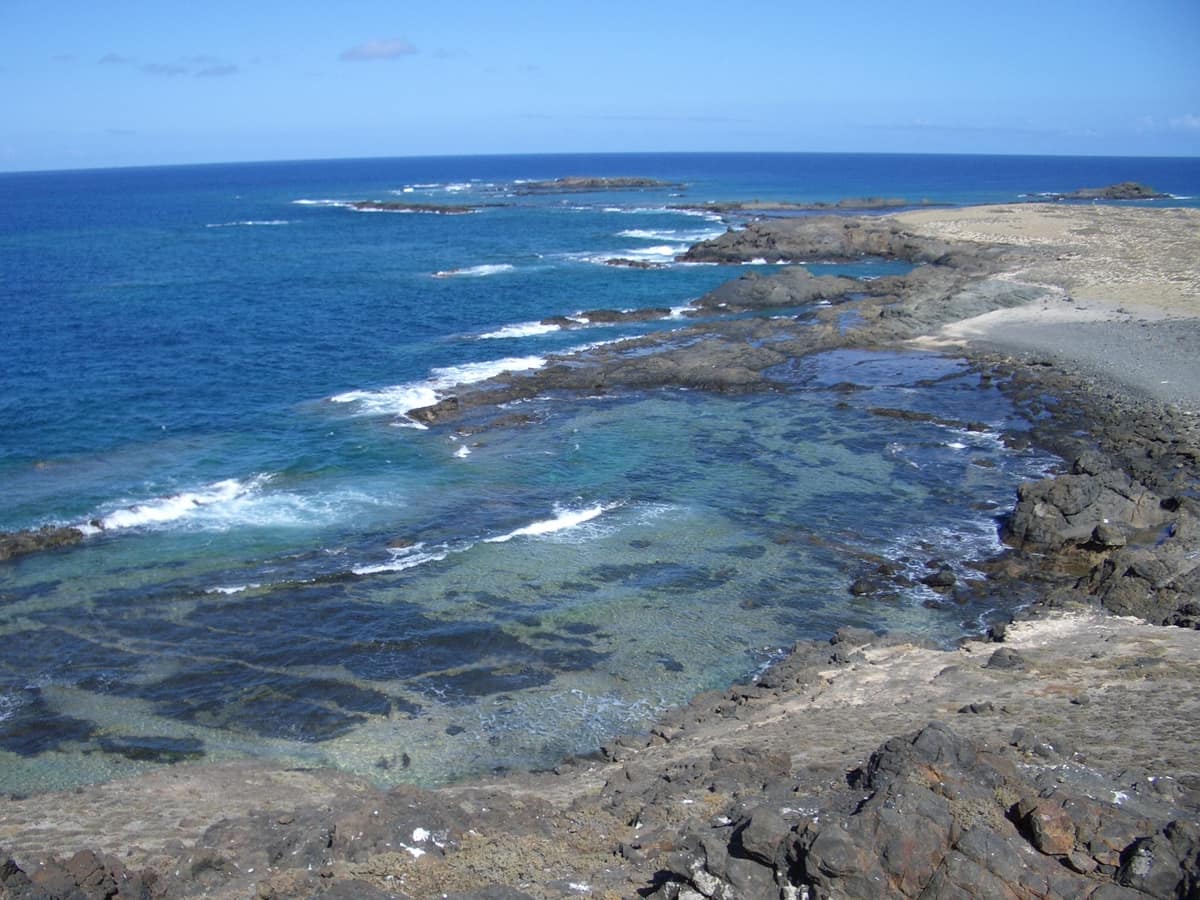
Selvagens Islands Nature Reserve
Islas Selvajes
Autonomous Region of Madeira (Selvagem Grande / Selvagem Pequena) · Portugal
Photo: Coimbra68 · CC BY-SA 3.0 · Wikimedia Commons
Portugal's southernmost territory and one of Europe's oldest strict marine reserves (1971), harbouring the world's densest colony of Cory's shearwater (Calonectris diomedea).
Before there was a nature reserve, there was slaughter. In the late nineteenth century, between twenty and twenty-two thousand Cory's shearwaters were harvested each September and October on these cliffs, and the hunting continued until 1967. Today the picture is inverted: on the Selvagens Islands, Portugal's southernmost territory, thrives the world's densest Cory's shearwater colony, making it one of the premier seabird breeding bastions of Macaronesia and the North Atlantic.
What makes it unique
They are the only mammal-free archipelago in Macaronesia, an authentic oceanic island relic untouched by the ecological disruptions brought by human navigation.
The place
Nature
The landscape
The archipelago consists of two main islands, Selvagem Grande and Selvagem Pequena, and several islets, the largest being Ilhéu de Fora. Selvagem Grande (245 hectares), pentagonal in outline, is an expansive plateau roughly one hundred metres high dropping into the Atlantic via volcanic sea cliffs. Selvagem Pequena (20 hectares) is low and level, predominantly covered in calcareous sand, crowned by a lighthouse on Pico do Veado. Ilhéu de Fora (8 hectares) is likewise carpeted in calcareous sand.
Geological history commenced with the opening of the Atlantic Ocean. The Selvagens are widely recognized as the earliest Madeiran islands to emerge, some 29 million years ago. Extended periods of volcanic dormancy and severe marine abrasion ensued until, 3.4 million years ago, a new eruptive phase gave rise on Selvagem Grande to the Upper Volcanic Complex. This volcanic edifice is today protected as a Natural Monument within Madeira's regional network.
The coast is sheer basaltic rock heavily battered by oceanic swell. On Selvagem Grande slopes are formidable; on Selvagem Pequena and Ilhéu de Fora, rocky wave-cut platforms alternate with small beaches of white calcareous sand.
Wildlife and seasons
Everything revolves around pelagic seabirds arriving solely to breed: except for the yellow-legged gull, all species are migratory and present only during their nesting season. Eight marine bird species breed here. Cory's shearwater attains its densest global nesting concentration, while the white-faced storm petrel forms the largest colony, exceeding 80,000 breeding pairs. Completing the assemblage are Bulwer's petrel, band-rumped storm petrel, and Little shearwater, all of Community interest, alongside common tern and the yellow-legged gull along the shores. The islands are designated a BirdLife Important Bird Area.
Terrestrial vertebrates are remarkably scarce: the only breeding passerine is Berthelot's pipit, endemic to Macaronesia, and the two terrestrial reptiles are endemic exclusively to the Selvagens. Other bird species visit on migration, particularly in autumn and spring. Mammals are entirely absent: following the successful eradication of rabbits and house mice on Selvagem Grande, the archipelago is wholly mammal-free, offering an extraordinary window into a pristine pre-human oceanic ecosystem.
Invertebrates compensate brilliantly: about 44 endemic terrestrial arthropod taxa occur, making the islands an evolutionary hotspot. The vascular flora comprises 105 taxa, featuring seven exclusive endemics across barely three square kilometres, notably the endangered shrubby daisy Argyranthemum thalassophilum (estreleira). Vegetation is fast-growing, xerophytic, and succulent, with crustose lichens clothing rocks from sea level to the highest summits.
Marine waters harbor 88 recorded inshore fish species and nine cetaceans, including fin whale, sperm whale, and the common bottlenose dolphin. The loggerhead sea turtle frequents Madeiran waters, with the Selvagens playing a crucial role in safeguarding its oceanic juvenile stage.
Species
With a page in the atlas
Being mentioned in a source doesn't guarantee sightings: check with the people who manage the area.
Memory and protection
History and conservation
Diogo Gomes de Sintra named the islands in 1438. For a time, the orchil lichen (Roccella tinctoria) was harvested here for the European textile dyeing trade. In 1971 the nature reserve was established—the first designated in Portugal—effectively halting the rampant hunting that pushed Cory's shearwaters to the brink and curbing illegal fishing.
In November 2021 the Regional Government of Madeira established Europe's largest fully protected marine reserve: 2,677 km² across a 12-nautical-mile radius, where extractive activities such as commercial fishing and aggregate mining are banned. Today four permanent wardens live on Selvagem Grande and two semi-permanent staff on Selvagem Pequena, representing the Madeira Natural Park.
Before you set off
Visiting
How to visit
The islands welcome hundreds of visitors annually, arriving on licensed maritime tourism boats, private yachts, or naval vessels, always subject to prior authorization from the IFCN. The core permitted activity is an interpretive guided walk, followed by observation of wildlife. Permits must be requested via the SIMplifica online portal; the reserve authority does not operate boat transfers.
Before you go
Access requires prior authorization from the IFCN. Consult the managing authority's official portal for permit procedures before planning any voyage.
Check access, rules and visiting conditions in the official information from the managing body before you set off.
Location
Where it is and how far it reaches
Boundary of Ilhas Selvagens · IUCN Ia · © EEA, CDDA (CC-BY) The coordinate is estimated; it isn't a verified access point.
Transparency
Sources
The research data with its sources, and the official links for this place, are in the Spanish version of this page. See the Spanish version
Around it
The Selvagens have no immediate neighbours in the atlas, but share pelagic shearwaters and oceanic cliffs with Fajã da Caldeira de Santo Cristo, Corvo Island, and the Cap Corse and Agriate Marine Natural Park.
If you like this place, elsewhere in Europe
Distant places with uncommon wildlife and habitats in common. The most widespread species don't count. Sharing species doesn't imply a corridor or guaranteed presence.
- Corvo Island Natural Park (Azores)
Autonomous Region of the Azores (Corvo Island / Vila do Corvo)
In common: Audubon's shearwater · Calonectris borealis · Sterna hirundo — wild coast, marine
The smallest and most remote island of the Azorean archipelago (17 km²), dominated by the Caldeirão (volcanic collapse caldera holding two interior lagoons).
JFMAMJJASONDMay – October · Crowding very low
- Lastovo Archipelago Nature Park
Dubrovnik-Neretva (Lastovo Island)
In common: Short-beaked common dolphin · Loggerhead sea turtle · Scopoli's shearwater — wild coast, marine
One of Croatia's most remote inhabited islands and dozens of islets, with pristine night skies and largely undisturbed seabed ecosystems.
JFMAMJJASONDMay – June · September – October · Crowding very low
Entry #655 of the original atlas.