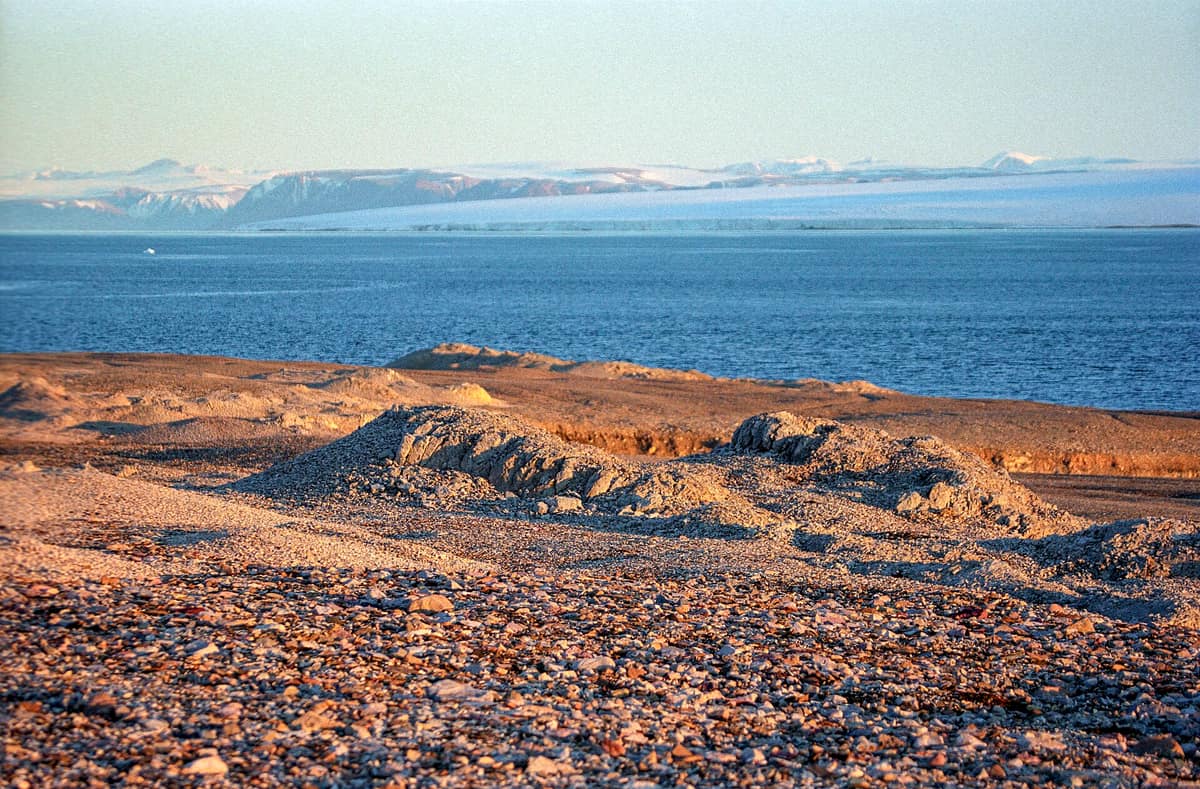
Northeast Svalbard Nature Reserve
Nordaust-Svalbard Nature Reserve
Svalbard Archipelago (Nordaustlandet Island / Kvitøya) · Norway
Photo: Jerzy Strzelecki · CC BY-SA 3.0 · Wikimedia Commons
Norway's largest strict nature reserve (55.000 km²), dominated by the Austfonna ice cap (Europe's largest ice cap outside Greenland).
There is a place in Norway where a single protected reserve is larger than any national park in the country, and almost no human foot ever touches it. Nordaust-Svalbard, in the northeast of the archipelago, encompasses some 55.354 km², comprising 18.663 of land and 36.691 of water. It covers the whole of Nordaustlandet, Kong Karls Land, Kvitøya, Sjuøyane, Storøya, Lågøya, Wilhelm Island, Wahlbergøya and a sliver of northeastern Spitsbergen. It is ice, sea and bedrock under polar desert skies, populated by polar bears, walruses and cliff-nesting seabirds.
What makes it unique
Here lies Norway's largest glacier and the most important polar bear nursery in this sector of the Arctic, the latter under strict access prohibition.
The place
Nature
The landscape
Three-quarters of Nordaustlandet are smothered beneath glaciers, and the largest, Austfonna, covers some 7000 km², reigning as Norway's most massive ice cap. Beside it lie Vestfonna and parts of Olav V Land. What remains ice-free is a landscape of low, rounded bedrock hills and frost-shattered plains gouged by Pleistocene ice sheets. Almost the entire reserve supports little or no vegetation, belonging to the high Arctic polar desert.
The coast tells another story. The scarce ice-free shores harbour dense seabird colonies and barnacle goose nesting grounds. Along the sheer cliffs of Alkefjellet, on the western shore of the Hinlopen Strait, towering dolerite sea stacks host spectacular bird bazaars.
Wildlife and seasons
The undisputed monarch is the polar bear. The islands of Kong Karls Land form the premier maternal denning ground for polar bears in this part of the Arctic, which is why access is banned year-round: the prohibition extends to sea waters within 500 m of shore and airspace below 500 m. The reserve also protects numerous haul-out sites for walruses, including maternal groups with calves.
Birdlife peaks during the short breeding season. Alkefjellet hosts massive colonies of Brünnich's guillemots, while barnacle geese, Sabine's gulls and ivory gulls breed along coastal tundra. Other key seabird havens include Sjuøyane, Lågøya and the Hinlopen Strait; extensive coastal cliffs are recognized as an Important Bird Area for supporting 80-90 breeding pairs of ivory gulls. On land, the Arctic fox and Svalbard reindeer are common.
Species
With a page in the atlas
Being mentioned in a source doesn't guarantee sightings: check with the people who manage the area.
Memory and protection
History and conservation
The reserve has been protected since 1 July 1973, bordering the Søraust-Svalbard nature reserve to the south. It is part of an overarching wilderness network: Svalbard hosts seven national parks, 21 nature reserves and a geotrope protection area, collectively safeguarding roughly 65% of the land area and 84% of territorial waters.
It also preserves poignant polar history. At Andréeneset on Kvitøya ended the ill-fated hydrogen balloon expedition of S. A. Andrée in 1897; a Russian Orthodox cross stands on Krossøya, wintering station remains of the 1899-1900 Swedish-Russian Arc-of-Meridian Expedition linger at Sorgfjorden, and a World War II German weather station lies at Rijpfjorden.
Before you set off
Visiting
How to visit
Visitors arrive exclusively by sea: expedition vessels typically sail east through the Hinlopen Strait or circumnavigate Nordaustlandet, with premier highlights including Sjuøyane, Alkefjellet, the Bråsvellbreen glacier waterfall wall, and Kvitøya. For organized tourism, shore landings are strictly restricted to mapped, approved landing sites led by qualified guides knowledgeable about arctic ecology and cultural heritage.
Landing on Nordaustlandet and Edgeøya (Zone A) requires notifying the Governor of Svalbard at least four weeks in advance, followed by a formal post-trip report. Camping for tourism, fieldwork or scientific research demands a special permit from the Governor, and camps must maintain continuous polar bear watch.
Before you go
This is not a destination for independent casual travel: before planning any journey, consult the Governor of Svalbard regarding required notifications, permits and accessible zones. In protected areas, visitors must leave no lasting traces, preventing erosion of terrain and cultural heritage; moved rocks and materials must be returned to their exact locations.
Check access, rules and visiting conditions in the official information from the managing body before you set off.
Location
Where it is and how far it reaches
Boundary of Nordaust-Svalbard · IUCN Ib · © EEA, CDDA (CC-BY) The coordinate is estimated; it isn't a verified access point.
Transparency
Sources
The research data with its sources, and the official links for this place, are in the Spanish version of this page. See the Spanish version
Around it
The Søraust-Svalbard Nature Reserve lies about sixteen kilometres to the south. Further afield, Northwest Spitsbergen National Park shares the high Arctic marine wilderness, polar bear and walrus.
What else to explore nearby
Approximate straight-line distance between the edges of each area. It doesn't indicate access, routes or driving times.
- Søraust-Svalbard Nature Reserve
Svalbard Archipelago (Edgeøya and Barentsøya Islands)
About 16 km away
The vast desert tundra islands of Edgeøya and Barentsøya (21.800 km²), a premier denning sanctuary for polar bears and massive walrus haul-outs.
JFMAMJJASONDJuly – August · Crowding none
If you like this place, elsewhere in Europe
Distant places with uncommon wildlife and habitats in common. The most widespread species don't count. Sharing species doesn't imply a corridor or guaranteed presence.
- Northwest Spitsbergen National Park
Svalbard Archipelago (Spitsbergen Island / Albert I Land / Haakon VII Land)
In common: Polar bear · Walrus — glacial landscape, marine, wild coast
The ultimate spectacle of the European High Arctic (79° N), with colossal tidewater glacier fronts in Magdalena and Kongsfjorden and geothermal springs at Bockfjorden.
JFMAMJJASONDJune – August · Crowding very low
Entry #609 of the original atlas.