Gerês-Xurés Transboundary Biosphere Reserve
Parque Nacional da Peneda-Gerês / Baixa Limia e Serra do Xurés
Northern Portugal (Viana do Castelo / Braga / Vila Real) (PT) / Galicia (Ourense / Lobios) (ES) · Portugal / Spain
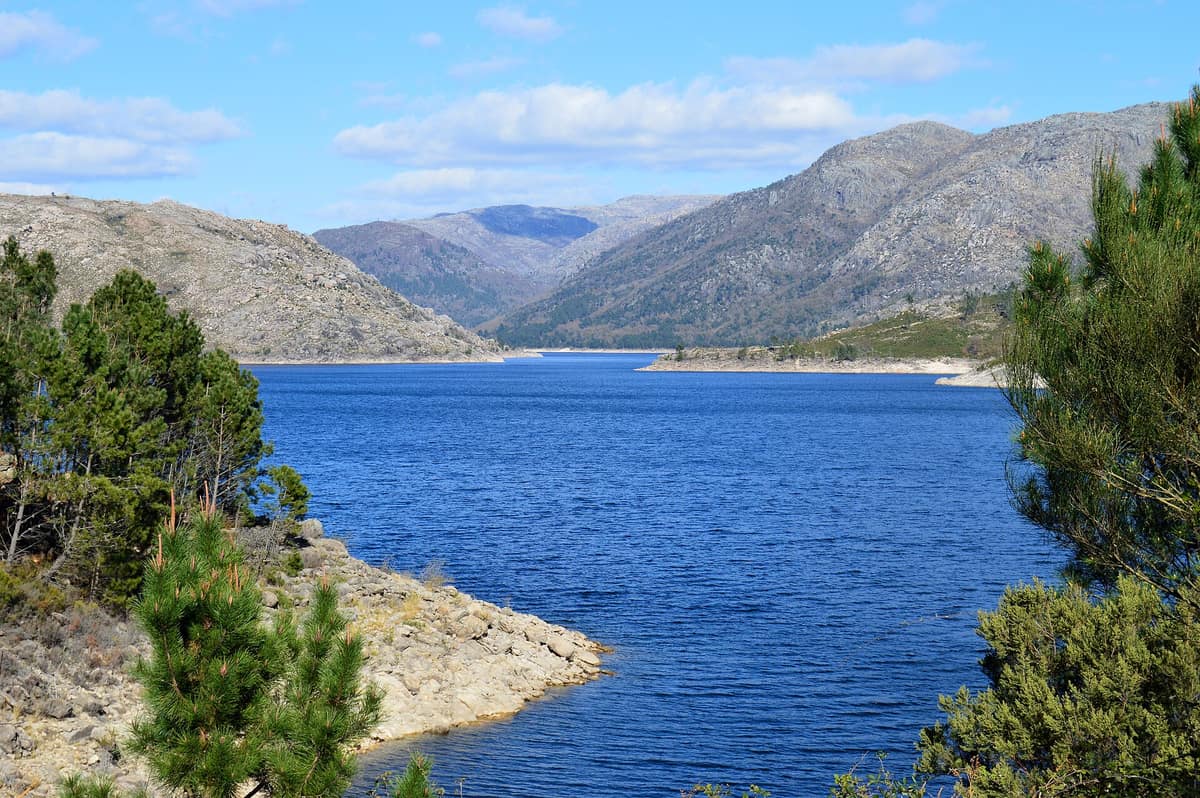
Photo: Beatriznog10 · CC BY-SA 3.0 · Wikimedia Commons
Portugal's sole National Park joined with Galicia's Serra do Xurés Natural Park, forming a transboundary reserve of granite monoliths and herds of free-roaming Garrano horses.
It rains more here than almost anywhere else in Portugal, and the landscape reflects it. The soaring ranges of Gerês and Peneda arrest moist Atlantic fronts, releasing torrential precipitation in a deluge of cascades, raging torrents, and oak woods: up to 3,200 millimetres of rainfall annually across the heights and more than 130 rainy days. Peneda-Gerês National Park, the country's sole national park, was established in May 1971 and, together with the Galician natural park of Baixa Limia–Serra do Xurés, forms an extraordinary transboundary biosphere reserve.
What makes it unique
It is the only national park in Portugal, shared across the border with Galicia to form the UNESCO Gerês-Xurés Transboundary Biosphere Reserve.
The place
Nature
The landscape
The park takes its name from its two core granite massifs: Serra da Peneda and Serra do Gerês. Alongside Serra Amarela and Serra do Soajo they form the dominant summits: Gerês (1,545 m), Altar dos Cabrões (1,538 m), Soajo (1,430 m), Amarela (1,350 m), and Peneda (1,340 m). Between them yawns a grand amphitheatre sculpted by tectonic forces, prevailing winds, and rushing water.
The underlying plutonic granite crystallized during the Variscan continental collision that welded Iberia to Europe, between 380 and 275 million years ago; the oldest pluton, in the Amarela, dates back 310 million years. Pleistocene glaciers subsequently reshaped the topography. Glacial ice has vanished, leaving classic U-shaped valleys, moraines, and polished granite pavements across Peneda, Soajo, and Gerês. Mineral veins yielded tin, tungsten, molybdenum, and gold from now-abandoned mines at Carris and Borrageiro.
Water animates every corner. The Minho, Lima, and Cávado rivers drain the territory, mountain streams and cascades tumble down steep slopes, and reservoirs at Alto Rabagão, Paradela, Caniçada, Vilarinho da Furna, and Lindoso submerge deep valleys.
Wildlife and seasons
In sheltered, humid valleys thrive ancient oakwoods dominated by pedunculate oak (Quercus robur) and Pyrenean oak (Quercus pyrenaica), notably throughout the valleys of Ramiscal, Peneda, Gerês, and Beredo. The old-growth stands of Albergaria and Cabril are preserved with remarkable integrity. Higher up, trees thin out and low scrub of gorse and heathers, blanketing 74 % of the park, claims the slopes. River corridors shelter botanical rarities such as the Macaronesian chain fern (Woodwardia radicans). In total, 823 vascular plant taxa have been inventoried, with regional endemics including the Gerês iris (Iris boissieri) and spurge-laurel (Thymelaea). The acidic granite bedrock supports a fascinating mosaic of Mediterranean, subtropical, Eurosiberian, and alpine flora.
Among the park's 235 vertebrate species, 200 are formally protected or threatened. The European roe deer serves as the park's mascot, while the wolf, long hunted as a pastoral predator and pushed to the brink of local extirpation, has enjoyed strict legal protection since the late twentieth century. While the Portuguese wild ibex vanished into extinction, the Iberian ibex naturally recolonized the ridges from Galicia, numbering about one hundred head by 2011. Garranos, ancient wild-type ponies of Minho lineage, wander free-range across high pastures showing little fear of humans. The fauna also includes pine marten, wildcat, red squirrel, Lataste's and Seoane's vipers, and three threatened bat species including the greater horseshoe bat. The gold-striped salamander, an endemic amphibian of north-western Iberia, thrives exclusively along cold, pristine mountain brooks.
Avian life encompasses 147 species, concentrated especially across the high plateau of Mourela, where golden eagle, red-billed chough, Eurasian eagle-owl, European honey buzzard, and whinchat are regularly logged. Mourela constitutes the sole breeding locality for the whinchat in Portugal.
Species
With a page in the atlas
Being mentioned in a source doesn't guarantee sightings: check with the people who manage the area.
Memory and protection
History and conservation
Human occupation dates back to the Neolithic: dolmens and megalithic burial mounds between 6000 and 3000 BC dot the landscape around Castro Laboreiro and Mourela. The Geira, the Roman military road connecting Bracara Augusta (Braga) to Asturica Augusta (Astorga), traversed the massif, preserving intact paved sections along the Homem River, Roman bridges, and milestones.
Inhabitants of Castro Laboreiro practised transhumance between brandas (high summer hamlets, inhabited from Easter to Christmas) and inverneiras (winter villages in sheltered valley bottoms). In 1970 the construction of the Vilarinho das Furnas dam flooded the ancestral community of the same name; during dry years its stone masonry emerges eerily from the reservoir. On mountain slopes survive several traditional fojos do lobo, medieval V-shaped stone walls designed as wolf-trapping corrals.
Since 1997 the national park has been paired with Galicia's Baixa Limia–Serra do Xurés Natural Park to create the Gerês-Xurés Transboundary Park. UNESCO recognized the area as a transboundary biosphere reserve in May 2009, spanning 267,958 hectares of protected landscapes across Galicia and Northern Portugal. Wildfires represent a persistent ecological threat: between 2000 and 2012 alone, 1,098 wildfire events scorched 31,901 hectares.
Before you set off
Visiting
How to visit
The Portuguese park maintains thirty-nine waymarked hiking routes totalling around 350 kilometres. Among long-distance routes are the GR50, the GR34, and the high-level Peneda-Soajo crossing. The transboundary reserve can also be explored on foot through an integrated cross-border trail network.
The Portas do Parque visitor centres provide environmental interpretation and educational programming for schools and travel groups. When planning excursions, bear in mind that trekking and wildlife watching may require prior permits depending on designated protection zones.
Among historic villages, Lindoso stands out for its extraordinary cluster of traditional stone espigueiros (granaries) beneath a thirteenth-century castle. The park also shelters the ruins of the Cistercian monastery of Santa Maria das Júnias, founded in 1147, along with two celebrated pilgrimage shrines: the Santuário de Nossa Senhora da Peneda and São Bento da Porta Aberta.
Before you go
Check regulations with the ICNF (Institute for Nature Conservation and Forests) before entering strict reserve areas, as certain mountain activities require prior authorization.
Check access, rules and visiting conditions in the official information from the managing body before you set off.
Location
Where it is and how far it reaches
Boundary of Baixa Limia-Serra do Xurés · © EEA, CDDA (CC-BY) The coordinate is estimated; it isn't a verified access point.
Transparency
Sources
The research data with its sources, and the official links for this place, are in the Spanish version of this page. See the Spanish version
Around it
While possessing no immediate atlas neighbours, it shares with other rugged montane havens species like the Eurasian eagle-owl, golden eagle, and pine marten: Els Ports Natural Park, Sierra Nevada National and Natural Park, and Retezat National Park.
If you like this place, elsewhere in Europe
Distant places with uncommon wildlife and habitats in common. The most widespread species don't count. Sharing species doesn't imply a corridor or guaranteed presence.
- Domogled - Cerna Valley National Park
Caraș-Severin, Mehedinți, and Gorj Counties
In common: Greater horseshoe bat · European pine marten · Eurasian eagle-owl — high mountain, karst and caves
Deep tectonic canyon flanked by Banat black pine and catchments with virgin montane beech woods.
JFMAMJJASONDMay – October · Crowding very low
- Montsant Natural Park
Catalonia (Province of Tarragona / Priorat comarca)
In common: Spanish ibex · Greater horseshoe bat · Eurasian eagle-owl — old-growth forest, karst and caves
A range of limestone-conglomerate ramparts, gorges and Mediterranean forest inhabited by Bonelli's eagle and Iberian ibex.
JFMAMJJASONDMarch – June · September – November · Crowding low
Entry #489 of the original atlas.