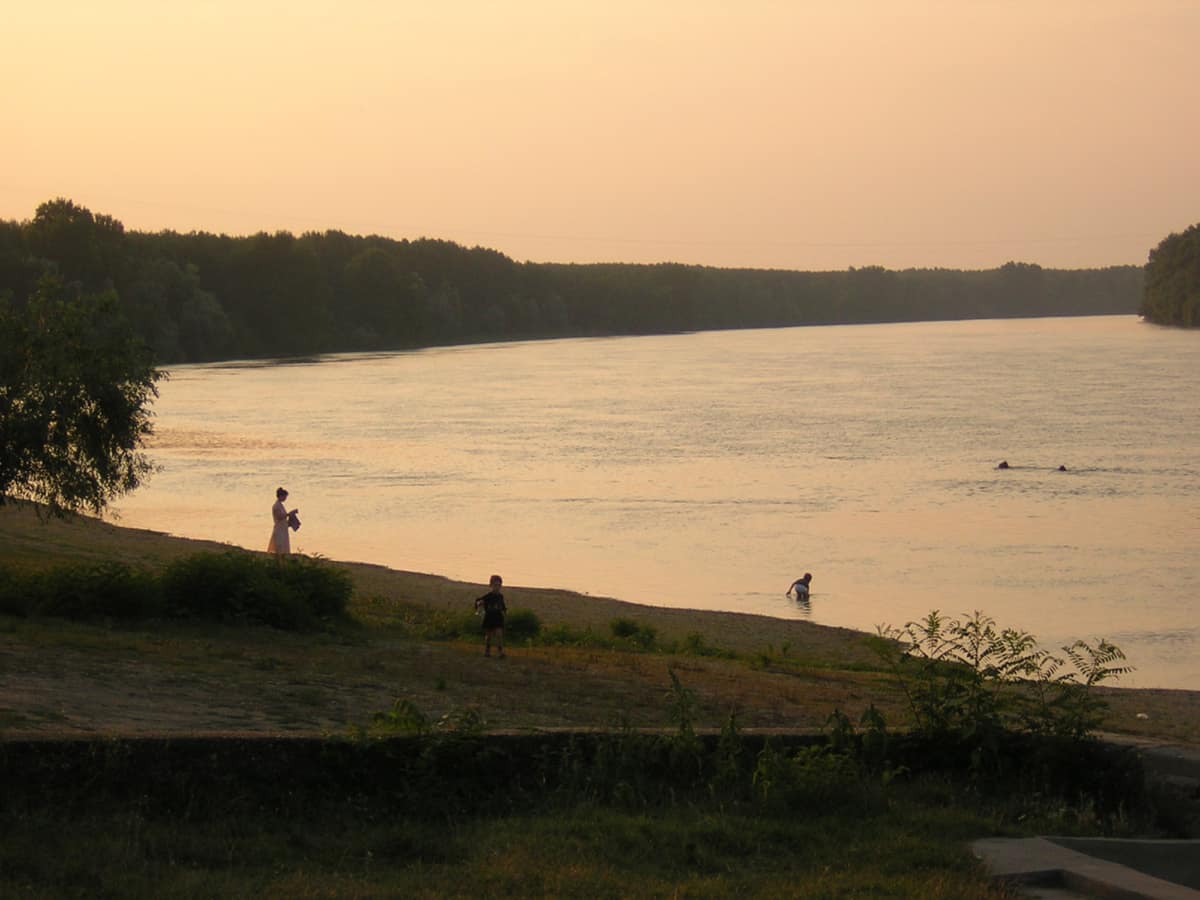
Persina Marshes
Pleven Province (Belene) · Bulgaria
Photo: en:User:Preslav · CC BY-SA 3.0 · Wikimedia Commons
Nature park embracing the Danube river islands of northern Bulgaria and their dynamic floodplain wetlands.
An island 15 km long, embraced by two arms of the Danube, giving its name to an entire protected landscape. Persin is the largest island in Bulgaria and the fourth largest on the Danube, surrounded by Persina Nature Park, established on 4 December 2000 across the municipalities of Nikopol, Belene and Svishtov. Its mission—to preserve and restore Danubian wetlands and maintain the river islands in their natural state—holds tangible meaning here: this is where the river still spills over its banks and mingles freely with the floodplain forest.
What makes it unique
The only nature park established along the Bulgarian stretch of the Danube valley.
The place
Nature
The landscape
Persina is shaped by two core ecosystems: the seasonally flooded gallery forests fringing the river and the inland marshes, which form the park's most valuable habitats. On eastern Persin Island, marshes merge with old-growth willow and poplar woodlands, extensive reedbeds and cattail swamps.
The island lives by water and has always depended on its pulse. Composed of soft alluvial silt and gravel, sections submerge whenever the Danube rises. The woodland canopy features white willows, black poplars and aspens. Within the Persinski Blata reserve, classic Danubian floodplain marshes retain their aquatic vegetation, safeguarding water caltrop, yellow floating heart and European frogbit.
Wildlife and seasons
The seasons bring shifting plumages. During the breeding season, boat trips offer close views of breeding herons, cormorants and Eurasian spoonbills; in winter, migratory pelicans and swans take pride of place. Belene Island supports more than 170 species of rare waterbirds, including glossy ibis, pygmy cormorant, lesser grey shrike and red-breasted goose. In Persinski Blata, mute swans nest and black storks gather in autumn. The pristine islands of Kitka and Milka preserve original riparian vegetation and nesting habitat for the white-tailed eagle.
Altogether, the park records 1,100 animal species, rich in zooplankton, zoobenthos and diverse aquatic invertebrates.
Species
With a page in the atlas
Being mentioned in a source doesn't guarantee sightings: check with the people who manage the area.
Memory and protection
History and conservation
Until 1947 local residents used Belene Island for grazing livestock, fishing and small-scale timber harvesting. From 1948 onward it was converted into a state labour camp and high-security prison, and heavy anthropogenic pressure degraded much of its original ecological value.
Recovery began through active habitat restoration. Between 2002 and 2008, a World Bank wetland restoration project reconnected the first Danubian marsh on Persin Island. A 2006 project re-established seasonal flooding in riparian forests and former wetlands on Belene Island; since then, marshes flood reliably, native fish stocks have rebounded and nesting bird populations have grown. On 24 September 2002 the island complex was designated a Ramsar site, and the Belene Islands Complex now forms part of the Natura network for bird protection.
Conservation networks
Before you set off
Visiting
How to visit
Begin at the visitor centre in Belene. From there departs the boat excursion "In the Embrace of the Danube": a six-passenger park launch navigates among the islands, passing close to a bustling mixed heron and cormorant colony. Boats depart from the town riverfront near the centre.
For an immersive wilderness experience, a specialised guided route on Persin Island explores wetland restoration, inland marshes and rare bird observation accompanied by an expert park ranger. It combines driving with short walking stretches. Waymarked cycling routes extend towards Kaykusha.
On the island, the park authority is erecting a dedicated Ramsar information post replacing an older observation tower, as part of the LIFE WILDisland conservation initiative.
Before you go
Visiting Persin Island requires a special access permit, and arrangements must be booked one month in advance. Boat excursions must be reserved at least 15 days in advance.
Check access, rules and visiting conditions in the official information from the managing body before you set off.
Location
Where it is and how far it reaches
Boundary of Persina · IUCN V · © EEA, CDDA (CC-BY) The coordinate is estimated; it isn't a verified access point.
Transparency
Sources
The research data with its sources, and the official links for this place, are in the Spanish version of this page. See the Spanish version
Around it
There are no other atlas sites nearby. Farther along the Danube, Srebarna Biosphere Reserve and Béda-Karapancsa Floodplain share Danubian wetlands and river corridors with Persina; Srebarna also shares the white-tailed eagle, while Béda-Karapancsa shares the eagle and black stork. Biosphärenreservat Spreewald shares water caltrop in low-gradient wetlands.
If you like this place, elsewhere in Europe
Distant places with uncommon wildlife and habitats in common. The most widespread species don't count. Sharing species doesn't imply a corridor or guaranteed presence.
- Evros Delta National Park
Thrace (Alexandroupoli / Feres)
In common: Dalmatian pelican · White-tailed eagle — wetland, river corridor
The great delta on the Greek-Turkish border, one of Greece's foremost wetlands for wintering and migratory birds.
JFMAMJJASONDNovember – May · Crowding none
- Middle Elbe Biosphere Reserve
Saxony-Anhalt (Dessau-Roßlau / Wittenberg)
In common: Trapa natans · White-tailed eagle — wetland, river corridor
The largest contiguous complex of alluvial hardwood oak floodplain forests in Central Europe.
JFMAMJJASONDMay – October · Crowding very low
Entry #146 of the original atlas.