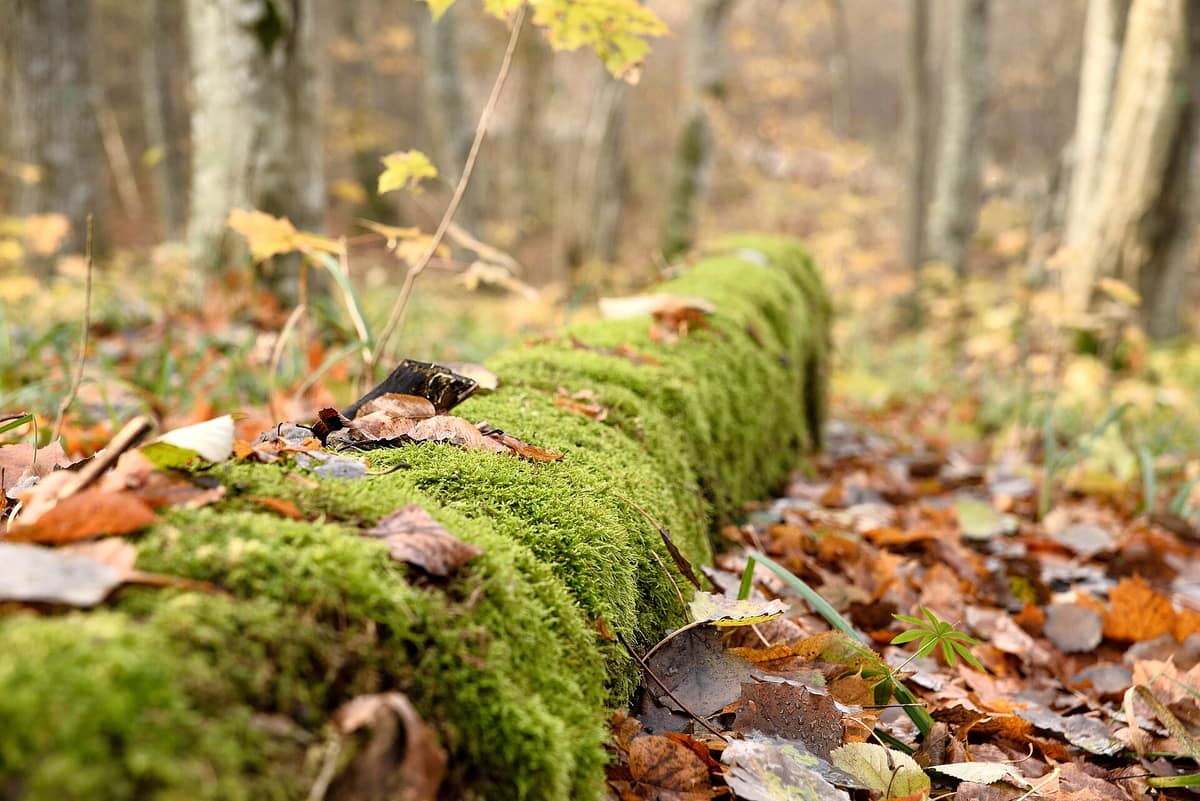
Borecka Forest - Natura 2000 Area
Puszcza Borecka - Obszar Natura 2000
Warmian-Masurian Voivodeship (Kruklanki) · Poland
Photo: Bartosz Dworski · CC BY-SA 3.0 pl · Wikimedia Commons
Diverse Masurian old-growth woodland harbouring a significant reintroduced free-ranging European bison population.
The wild European bison of the Puszcza Borecka roam free, but actively shun human encounters. To allow visitors to observe them safely, a dedicated semi-open reserve was built near Wolisko where several animals reside permanently. That gentle paradox encapsulates this place: a vast Masurian woodland covering 230 km², the largest contiguous forest complex in the Ełk Lake District east of Lake Mamry, revealing its wild secrets only gradually.
It is a vibrant tapestry of small-leaved linden, pedunculate oak, and Norway spruce cradled by the Great Masurian Lakes, sheltering an internationally significant population of reintroduced free-ranging European bison.
What makes it unique
A complex multi-species forest free of monocultures, where European bison were released in 1956 and were roaming completely wild six years later.
The place
Nature
The landscape
The terrain is undulating, formed by glacial moraine hills that lack the continuous ridge crests typical elsewhere. This chaotic postglacial topography hindered historic agriculture, successfully safeguarding extensive tracts of deep, fertile soils characteristic of temperate hornbeam-oak forests. The highest eminence is Lipowa Góra, rising to 223 m. Tucked among moraines lie enclosed hollows without surface drainage, where raised bogs and transitional mires have formed. The principal lakes are Szwałk Wielki, Piłwąg, Haszno (Łaźno), and Litygajno.
Dense woodland blankets nearly 92 % of the territory. Monoculture plantations are completely absent: the multi-tiered canopy is dominated by oak, hornbeam, linden, ash, spruce, black alder, Norway maple, and downy birch. Botanical surveys record some three hundred plant species, 38 of which are legally protected, and around 90 lichen taxa, with old-growth rarities featuring English yew (Taxus baccata).
Wildlife and seasons
The mammal community includes elk, European bison, Eurasian lynx, Eurasian otter, beaver, and wolf. The lynx remains scarce due to vast territorial requirements and direct competition from resident wolf packs, which exert predatory pressure, particularly on lynx kittens.
The history of the European bison here is relatively recent. Animals were first released into enclosures in 1956 for captive breeding; six years later the entire herd was granted complete liberty. The census of the free-roaming Borecka herd recorded 155 animals, comprising 73 males and 82 females.
Avian records document 141 bird species, featuring white-backed woodpecker, middle spotted woodpecker, and red-breasted flycatcher, alongside breeding Eurasian bitterns and common cranes. Protected nesting raptors and large birds include white-tailed eagle pairs, lesser spotted eagles (around 25 pairs), black storks (16 pairs), and an active osprey pair. The Borki nature reserve was designated to preserve primeval forest structures and four flagship species: European bison, collared flycatcher, white-backed woodpecker, and lungwort lichen (Lobaria pulmonaria).
May to October is the finest season to visit.
Species
With a page in the atlas
Being mentioned in a source doesn't guarantee sightings: check with the people who manage the area.
Memory and protection
History and conservation
Until the seventh century BC, this territory formed part of the boundless, uninhabited primeval wilderness known as Puszcza Galindzka. Over subsequent centuries, extensive forest clearances swept the region, clearing fertile broadleaf soils, so that by the seventeenth century the perimeter of Puszcza Borecka approximated its present configuration.
The Mazury reserve, spanning between lakes Szwałk Wielki, Piłwąg, and Łaźno, provides a quiet haven for waterfowl; the Borki reserve protects multi-tiered virgin stands with spruce, hornbeam, oak, ash, and linden aged between 100 and 150 years; and Lipowy Jar preserves dense, diverse broadleaf forest on steep ravine slopes bordering Lake Piłwąg.
Before you set off
Visiting
How to visit
The Wolisko bison enclosure serves educational purposes while providing an acclimatization facility for bison prior to joining the wild herd. It covers an enclosed paddock of seven hectares with pasture, mature tree groves, and a natural watering hole. The local forest inspectorate requests visitors check opening regulations in advance.
Two interpretive nature trails traverse the forest. The Kruklanki trail features 12 thematic stops crossing a varied rural and forest mosaic: village lanes, crop margins, woodlands, lake and pond shores, dirt tracks, and an abandoned railway embankment, discovering historic military and civil engineering structures. The Ogonki trail in Pozezdrze comprises two loops—a shorter circuit of 1.95 km and a longer walk of about three kilometres—with 12 interpretive panels explaining the ecology of Masurian forests, complemented by an open-air forest classroom for student groups.
Before you go
Check visiting hours and access rules for the Wolisko bison demonstration enclosure prior to travelling. Consult the Borki Forest District website to verify trail conditions and closures.
Check access, rules and visiting conditions in the official information from the managing body before you set off.
Location
Where it is and how far it reaches
Boundary of Puszczy Boreckiej · © EEA, CDDA (CC-BY) The coordinate is estimated; it isn't a verified access point.
Transparency
Sources
The research data with its sources, and the official links for this place, are in the Spanish version of this page. See the Spanish version
Around it
Eighteen kilometres away lies the Romincka Forest Landscape Park. Further afield, Białowieża National Park - Strict Reserve shares the collared flycatcher, white-backed woodpecker, and European bison, as do Havešová Strict Nature Reserve and Crișul Repede Gorge.
What else to explore nearby
Approximate straight-line distance between the edges of each area. It doesn't indicate access, routes or driving times.
- Romincka Forest Landscape Park
Warmian-Masurian Voivodeship (Gołdap)
About 18 km away
The 'Polish Taiga', a boreal spruce forest across steep moraine ridges famed for the Stańczyki viaducts.
JFMAMJJASONDMay – October · Crowding very low
If you like this place, elsewhere in Europe
Distant places with uncommon wildlife and habitats in common. The most widespread species don't count. Sharing species doesn't imply a corridor or guaranteed presence.
- Białowieża National Park - Strict Reserve
Podlaskie Voivodeship (Białowieża)
In common: Collared flycatcher · European bison · White-backed woodpecker
The last lowland primeval forest of Central Europe, historic refuge of the European bison.
JFMAMJJASONDMay – October · Crowding moderate
- Havešová Strict Nature Reserve
Prešov Region (Poloniny National Park)
In common: Collared flycatcher · White-backed woodpecker · Eurasian lynx
Virgin beech forest with record-breaking trees exceeding 50 metres in height in the Eastern Carpathians.
JFMAMJJASONDMay – October · Crowding very low
Entry #102 of the original atlas.