Handa Island Nature Reserve
Isle of Handa
Scotland (Sutherland / Scourie / Tarbet) · United Kingdom
Photo: David Purchase · CC BY-SA 2.0 · Wikimedia Commons
Torridonian sandstone Scottish Wildlife Trust island sanctuary with the sheer ramparts of The Stack of Handa sheltering 100,000 seabirds.
Each spring, tens of thousands of pelagic seabirds converge on a single dramatic stretch of coast: the Torridonian sandstone sea cliffs towering from the Atlantic in northwest Handa. The island, covering 309 hectares with an elevation of 123 metres, sits in Eddrachillis Bay off west Sutherland, reached by an open passenger ferry from Tarbet. It is a Scottish Wildlife Trust nature reserve of international importance for guillemots, razorbills, and great skuas.
What makes it unique
The Torridonian sandstone of Handa is over a billion years old, and across its rock ledges breeds one of the largest common guillemot colonies in the United Kingdom.
The place
Nature
The landscape
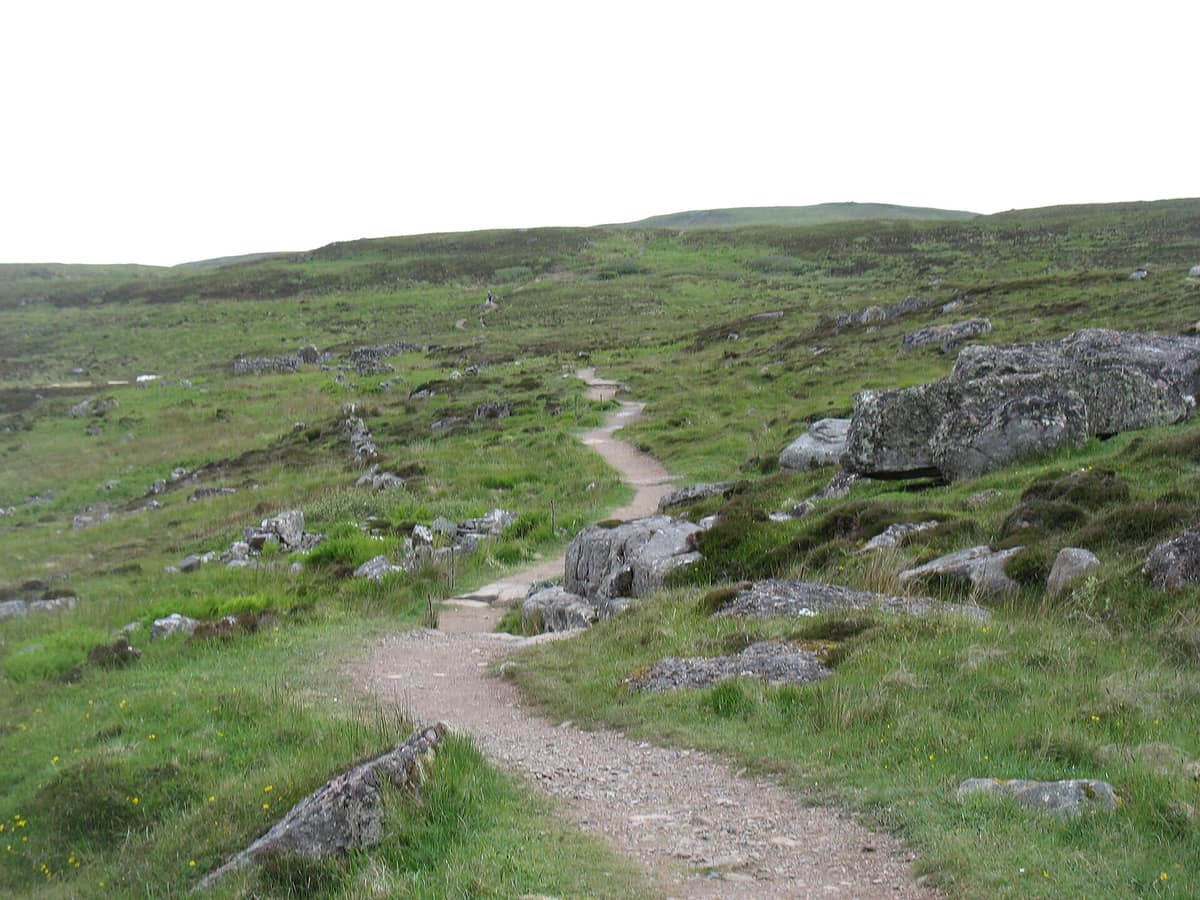
Ancient Torridonian sandstone forms the bedrock of the island. To the north and west, it drops sheer into ocean cliffs of some 100 metres; to the south and east lie sheltered sandy beaches. A modest hill with two summits rises in the north, while the remainder comprises rolling coastal moorland. Horizontal sandstone ledges provide ideal natural nesting shelves for seabirds.
The Great Stack of Handa, among Scotland's most dramatic sea pillars, boasts its own mountaineering legend. In 1876 Donald McDonald, a native of St Kilda, completed the first climb by bridging a 24-metre void lashed to a rope.
On exposed cliff brows, sea pink, sea plantain, and red fescue withstand salt spray, while sheltered maritime swards burst with bluebells and Scots lovage.
Wildlife and seasons
The breeding seabird season runs from April to July. Atlantic puffins are best observed from mid-May to July around the Great Stack. The sea cliffs host teeming colonies of common murres, northern fulmars, razorbills, and black-legged kittiwakes, with nationally significant numbers of Arctic skuas.
Inland moorlands belong to the great skuas, or bonxies. Reserve wardens monitor breeding pairs closely and have noted serious recent population declines, largely attributable to avian influenza. Two small peat lochans host nesting pairs of red-throated divers, visible from the timber boardwalk.
From the coastal trail, observers regularly spot minke whales, bottlenose and Risso's dolphins, grey seals, and occasionally killer whales or basking sharks. In Boulder Bay on the south shore, seals and Eurasian otters are frequently encountered.
Species
With a page in the atlas
Being mentioned in a source doesn't guarantee sightings: check with the people who manage the area.
Memory and protection
History and conservation
Handa was long used as a burial isle: ruins of an ancient chapel survive, chosen because mainland wolves were known to exhume graves. In 1841 the island had 65 inhabitants; following the potato famine of 1847, the community emigrated to Nova Scotia. They had an egalitarian council meeting daily, where the eldest widow was respectfully called the "Queen".
The Scourie Estate owns the island and manages it in partnership with the Scottish Wildlife Trust. Handa is designated an SSSI and an SPA.
Before you set off
Visiting
How to visit
A passenger foot-ferry operates from Tarbet on the mainland during the visitor season, running from early April to late August or early September. The crossing takes around 10 minutes in calm seas, but can be wind-swept: wear waterproofs and sturdy walking shoes with solid tread for the timber boardwalks and rocky paths. On arrival, a resident volunteer welcomes you with an introductory briefing about the reserve.
A full-time ranger resides on the island through peak season, supported by volunteers who maintain the boardwalk and carry out bird counts. Volunteer placements range from one week to longer assistant warden internships spanning 8 to 21 weeks.
Before you go
Dogs are strictly prohibited on the island to safeguard vulnerable ground-nesting birds, and the ferry will not carry them. During gale-force winds and heavy ocean swells, the boat cannot sail and the island remains closed; no ferry runs on Sundays, and sailings operate at the skipper's discretion in unsettled weather. Contact the reserve ranger or ferry operator for daily conditions before travelling.
Check access, rules and visiting conditions in the official information from the managing body before you set off.
Location
Where it is and how far it reaches
Boundary of Handa Island · © OpenStreetMap contributors (ODbL) The coordinate is estimated; it isn't a verified access point.
Transparency
Sources
The research data with its sources, and the official links for this place, are in the Spanish version of this page. See the Spanish version
Around it
Handa shares bustling seabird colonies with other renowned isles across the atlas. With Fair Isle Bird Sanctuary it shares great skuas, common guillemots, and puffins; with Noss National Nature Reserve, the Sept-Îles Nature Reserve, and the Vestmanna Bird Cliffs, it shares teeming cliffs of common guillemots and Atlantic puffins.
If you like this place, elsewhere in Europe
Distant places with uncommon wildlife and habitats in common. The most widespread species don't count. Sharing species doesn't imply a corridor or guaranteed presence.
- Fair Isle Bird Sanctuary
Scotland (Shetland Islands)
In common: Great skua · Common murre · Atlantic puffin — wild coast, marine
The isolated island midway between Orkney and Shetland, historic mecca for migratory vagrant birds and traditional knitwear.
JFMAMJJASONDMay – October · Crowding very low
- Isle of Noss National Nature Reserve
Scotland (Shetland Islands / Bressay)
In common: Common murre · Atlantic puffin — wild coast, marine
Red sandstone sea cliffs rising 180 m at the Noup of Noss, where over 150.000 seabirds nest.
JFMAMJJASONDMay – August · Crowding very low
- Sept-Îles Nature Reserve
Brittany (Côtes-d'Armor — Perros-Guirec)
In common: Common murre · Atlantic puffin — wild coast, marine
France's largest colony of northern gannets and the puffin's last refuge on the French coast.
JFMAMJJASONDApril – July · Crowding low
Entry #620 of the original atlas.