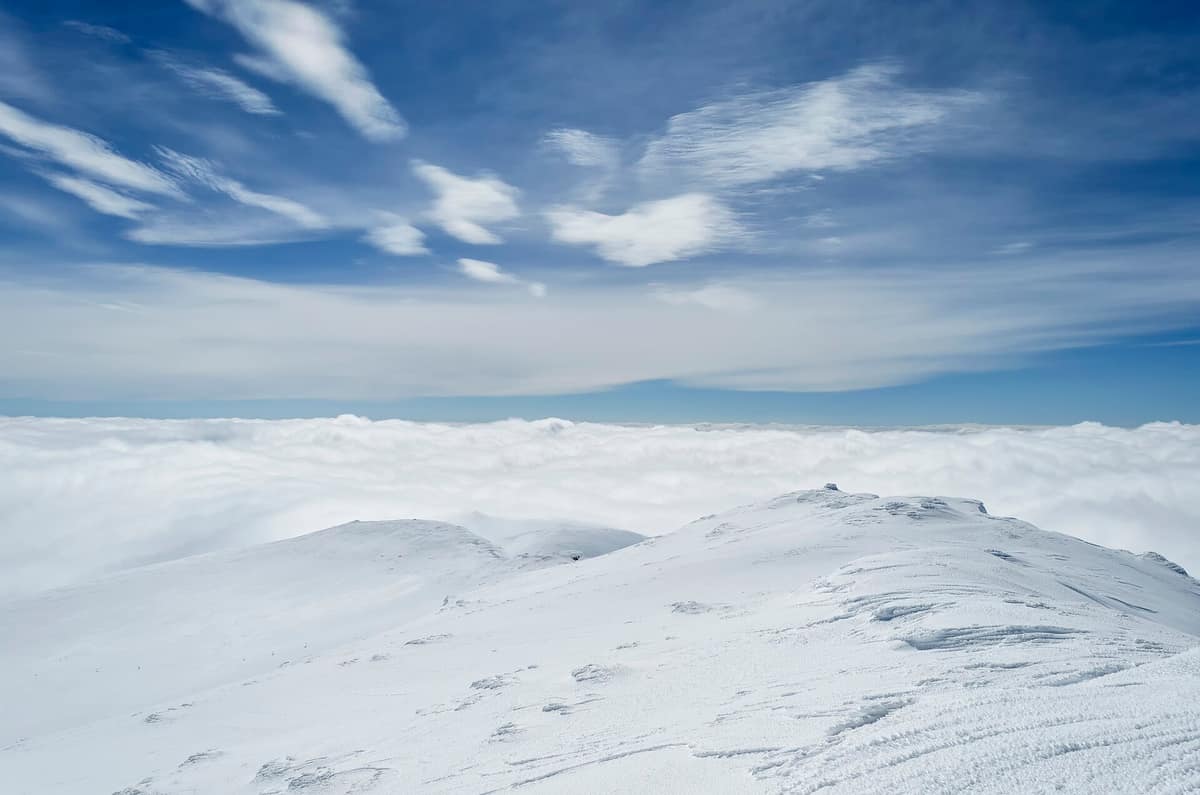
Pelister National Park
Национален парк Пелистер
Pelagonia (Bitola / Resen) · North Macedonia
Photo: Шпиц · CC BY-SA 4.0 · Wikimedia Commons
The oldest national park in North Macedonia (1948), established to preserve primeval Macedonian pine (molika) forests.
In 1839 a German botanist ascended Pelister accompanied by eleven Ottoman soldiers, collected twigs from a conifer undescribed by science, and named it Pinus peuce. Nearly two centuries later, this five-needled pine stands as the enduring emblem of the park. Pelister National Park, situated on the Baba massif, was established in 1948 as the very first national park in Yugoslavia and remains the oldest protected wilderness in North Macedonia. It encompasses 17 150 hectares spanning the municipalities of Bitola and Resen, rising from 891 to 2601 m.
What makes it unique
The Macedonian pine, or molika, a Tertiary relict that spurred the park’s original declaration, alongside twin glacial tarns celebrated as the Eyes of Pelister.
The place
Nature
The landscape
Baba is an imposing massif composed of granites and crystalline schists, scarred by glacial erosion and sprawling periglacial "stone rivers". During the Pleistocene its highest crests supported valley glaciers that carved cirques and moraines; from that icy epoch remain two mountain tarns: the Eyes of Pelister, nestled at 2218 and 2180 m altitude.
Dense forests dominate the mountain slopes. Moesian beechwoods predominate, succeeded by subalpine and boreal dwarf scrub, and oromediterranean molika pine woodlands; higher up, subalpine grasslands unfold. The flora is remarkably rich: over 1050 vascular plant species, including 88 tree species, distributed across 21 distinct plant communities. The molika pine is a Tertiary relict and Balkan endemic, characterized by five needles per fascicle; silver fir seeks out moist, shaded hollows, competing with it for canopy space.
Wildlife and seasons
More than 200 animal species inhabit the park. The brown bear finds ample food, foraging on bilberries and wood ants; tracks of the wolf appear throughout the massif, from lower elevations to alpine ridges, while the Balkan lynx is exceptionally rare without a stable breeding nucleus. Montane birds include hazel grouse, Eurasian eagle-owl, tawny owl, nightjar, various woodpeckers, and the golden eagle. High alpine crags belong to the Balkan chamois, while European snow voles dwell among talus slopes. Upper ridges also host red-billed chough, common rock thrush, ring ouzel, and rock partridge. Reptiles include Hermann’s tortoise, Aesculapian snake, and smooth snake.
Visitors frequently mistake European wildcats for lynx, though their physical markings differ noticeably.
Species
With a page in the atlas
Being mentioned in a source doesn't guarantee sightings: check with the people who manage the area.
Memory and protection
History and conservation
As early as 1938, alpine refuges stood at Begova Česma at 1420 m and Kopanki at 1610 m. Pelister served as a critical fortified sector during battles along the Macedonian Front from 1916 to 1918, and traces of entrenchments, dugouts, and gun emplacements remain scattered across the ridges. Malovište is the sole village within park boundaries: an open-air ethnological museum of Aromanian architecture with stone houses dating back 150 to 200 years.
Before you set off
Visiting
How to visit
The most popular trails originate at the Pelister visitor information centre and the Hotel Molika, a fifteen-minute drive from Bitola. The gentlest is the historical trail: starting beside the information centre, it covers 1,7 km, requires about 50 minutes with 143 m of elevation gain, and is graded easy. Interpretive panels and maps illustrate First World War military maneuvers and soldier life along the frontline.
For summit ascents, two classic routes stand out. Via Bolnici, spanning 19,7 km and taking around 7 h 55 min with 1242 m of climbing, suitable from May to November: at 2200 m historic wartime field hospitals operated, while the peak features an antenna with sweeping views across Lake Prespa and the Korab and Šar ranges. Via Shiroka, covering 12,8 km and roughly 3 h 50 min with 1220 m of ascent, fitted with winter metal waymarker poles that guide hikers safely through deep snow and clear of avalanche paths.
To visit the tarns, the traverse linking the summit and both glacial lakes spans 22,1 km and 1358 m of ascent; it is usually split over two days, staying overnight at the mountain refuge beside the Big Lake. The trail from the Sapunčica river to the Big Lake is a circuit of 18,3 km and 884 m of elevation gain, starting near the Strezevo ski centre; along the "French Road", a First World War military track, remains of trenches and bunkers line the way.
Before you go
The park authority requests that visitors register their hike online or at the entrance prior to arrival; verify current registration procedures. Trails remain open 24 hours a day, though trekking during daylight hours is strongly advised. Open fires are strictly prohibited, and camping is permitted only at officially designated sites; dogs must be kept on a leash to prevent disturbing native wildlife.
Check access, rules and visiting conditions in the official information from the managing body before you set off.
Location
Where it is and how far it reaches
Boundary of Pelister · © EEA, CDDA (CC-BY) The coordinate is estimated; it isn't a verified access point.
Transparency
Sources
The research data with its sources, and the official links for this place, are in the Spanish version of this page. See the Spanish version
Around it
Six kilometres away lies the Prespa National Park, and twelve kilometres distant stands Galičica National Park. Further afield, Pirin National Park - Forest Wilderness shares Macedonian pine, chamois, and brown bear, while Maritime Alps Nature Park, Vanoise National Park, and Gran Paradiso National Park share alpine heights, chamois, and golden eagles.
If you like this place, elsewhere in Europe
Distant places with uncommon wildlife and habitats in common. The most widespread species don't count. Sharing species doesn't imply a corridor or guaranteed presence.
- Domogled - Cerna Valley National Park
Caraș-Severin, Mehedinți, and Gorj Counties
In common: Hermann's tortoise · Eurasian eagle-owl · Eurasian otter — high mountain, primary forest
Deep tectonic canyon flanked by Banat black pine and catchments with virgin montane beech woods.
JFMAMJJASONDMay – October · Crowding very low
- Els Ports Natural Park
Catalonia / Aragon / Valencian Community (Tarragona / Teruel / Castellón / Roquetes / Tortosa)
In common: Hermann's tortoise · Bearded vulture · Eurasian eagle-owl — high mountain
A rugged karst massif between Catalonia, Aragon, and the Valencian Community featuring limestone cliffs, southern beech groves, and the Iberian ibex.
JFMAMJJASONDApril – June · September – November · Crowding low
- Maritime Alps Natural Park
Piedmont (Cuneo / Valdieri / Entracque)
In common: Bearded vulture · Fagus sylvatica · Chamois — high mountain, glacial landscape
United with France's Mercantour National Park, it forms a massive cross-border Alpine-Mediterranean wilderness crowned by Mount Argentera (3.297 m).
JFMAMJJASONDJune – October · Crowding low
Entry #1034 of the original atlas.