The Flow Country — Caithness and Sutherland Peatlands
The Flow Country
Scotland (Caithness and Sutherland — Forsinard) · United Kingdom
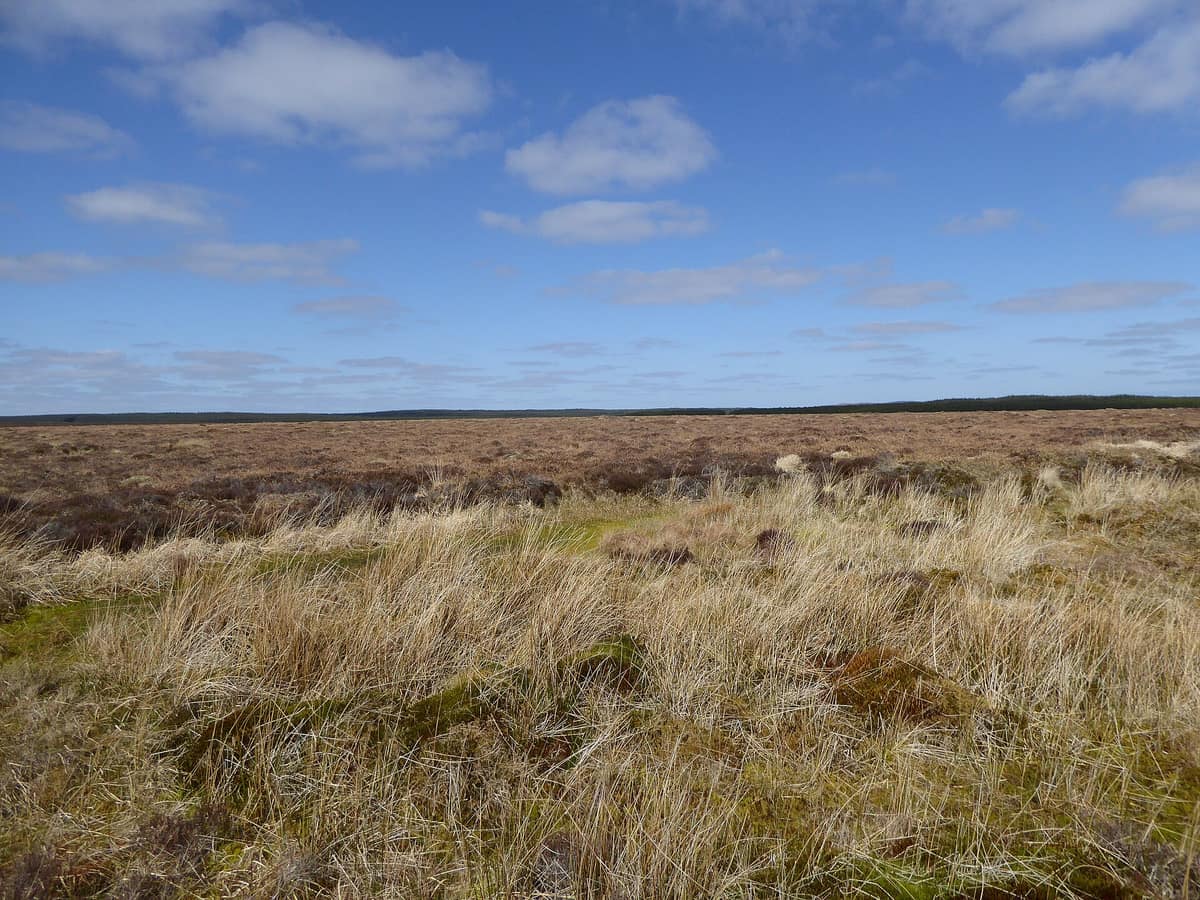
Photo: Mick Crawley · CC BY-SA 2.0 · Wikimedia Commons
Europe's largest blanket bog expanse, World Heritage site since 2024: an intricate expanse of pool complexes and sphagnum moss locking up carbon since the last Ice Age.
Here the protagonist is the ground beneath your feet: deep, waterlogged peat studded with glittering dubh-lochain pool systems. The Flow Country constitutes Europe's largest expanse of blanket bog, spanning roughly 4,000 km² across Caithness and Sutherland in northern Scotland. In 2024 UNESCO inscribed it as a World Heritage site in recognition of its peerless blanket mire ecosystem. It also forms a vital breeding habitat for birdlife. Here the crowning wonder is neither a mountain crest nor an ocean cliff, but what unfolds across soils continuously soaked for thousands of years.
What makes it unique
The largest blanket bog in Europe, a landscape of pool systems and mosses storing vast carbon reserves over millennia.
The place
Nature
The landscape
Everything stems from water. Relentless rainfall saturated the ground, and this persistent waterlogging allowed peat mosses to cloak hills, slopes, and hollows like an unbroken mantle. Peat has accumulated here for 9,000 years, in places exceeding eight metres in depth. Around Forsinard, depth varies from under 50 cm to over 6 m resting atop syenite and granite bedrock. The climate is cool, windy, and hyper-oceanic.
This blanket peat is botanical memory. It consists primarily of partially decomposed plant remains, which are themselves rich in carbon, locking away immense reserves for millennia that would otherwise escape into the atmosphere. Among the keystone plants are sphagnum mosses, capable of absorbing prodigious amounts of water and gradually turning into peat. Alongside them grow Erica tetralix, Sphagnum papillosum, Trichophorum cespitosum, and Eriophorum vaginatum. Carnivorous plants such as round-leaved sundew, great sundew, and common butterwort thrive by trapping the abundant insect life.
The peat pools fluctuate with weather and hydrology: from shallow hollows to open lochans, creating varied patterning complexes. The freshwater lochs, ranging from nutrient-poor to mesotrophic, exhibit exceptional ecological purity.
Wildlife and seasons
The optimal window is spring and early summer. Along the trails at Forsinard you can encounter European golden plover, dunlin, common greenshank, and hen harrier, alongside skylark and meadow pipit. These birds nest across the open mire, as does the merlin. Rarer species, such as the red-throated diver, black-throated diver, and common scoter, breed on remote inland lochs and pool complexes where they are seldom disturbed.
Closer to the path, life is miniature. Common lizards bask along the boardwalk edges, while dragonflies, frogs, and aquatic beetles animate the peat pools. Barn swallows frequently nest inside the Flows Lookout tower. Across the network of lochs and river headwaters, healthy populations of Eurasian otter thrive, alongside rare water beetles such as Oreodytes alpinus. Birds congregate regularly across feeding grounds beside the Forsinain trail, including golden plovers, dunlins, and curlews.
A seasonal note: midsummer brings abundant midges and horseflies across the open moor.
Species
With a page in the atlas
Being mentioned in a source doesn't guarantee sightings: check with the people who manage the area.
Memory and protection
History and conservation
Over the past 200 years the blanket mire suffered degradation from extensive sheep grazing and commercial forestry plantation. Today's restoration works around Forsinard reverse that damage, framed within a national peatland strategy designed in close consultation with local communities.
Pressures are twofold. Historically, artificial drainage, muirburn, and peat erosion degraded mire systems and released carbon. More recently, UNESCO highlighted prospective windfarm infrastructure and its potential impacts on breeding birds as an emergent concern.
Before you set off
Visiting
How to visit
Begin your journey at Forsinard. The visitor centre occupies the historic railway station building and can be reached by train, car, or bicycle. It shares parking with the station and provides direct access to the Flows Lookout viewing tower and the Dubh-lochain boardwalk. Inside, an interactive exhibition interprets the natural heritage, cultural history, and peatland restoration of the Flow Country.
The Dubh-lochain boardwalk offers easy, accessible entry onto the wet peatland for a wide range of visitors. If you seek longer walks, three trails are available. The Forsinain loop spans 6.5 km across farmland, open moor, and restored forestry blocks. Loch a’Mhuilinn covers 1.6 km with two spurs extending to the loch shore, passing historic peat-cutting banks where fuel was once hand-dug for domestic hearths. Strathy Pools adds 3.2 km with expansive panoramas over North Sutherland.
The regional story is complemented by local museums. Strathnaver Museum in Bettyhill recounts Highland clearances, Clan Mackay, crofting, and traditional peat cutting. Timespan in Helmsdale combines archaeology, craft, social history, and contemporary art. Dunbeath Heritage Centre features rotating exhibitions on local archaeology and crofting heritage. The North Coast Visitor Centre in Thurso traces Caithness history from the Devonian era to modern times. Ferrycroft in Lairg offers displays on water, land, people, and children's nature trails. Panoramic viewpoints and interpretive boards also stand at A’ Mhoine, Loch Rangag, and Cnoc Craggie.
Before you go
At Forsinard, dogs must be kept on a short lead or under close control, especially during the avian breeding season from April through July. The RSPB strictly prohibits barbecues and campfires across the reserve at all times. Accessible toilets are provided at the visitor centre, though facility details should be confirmed beforehand. Check seasonal opening hours online for each regional heritage centre before visiting.
Check access, rules and visiting conditions in the official information from the managing body before you set off.
Location
Where it is and how far it reaches
Boundary of Caithness and Sutherland Peatlands · © EEA, CDDA (CC-BY) The coordinate is estimated; it isn't a verified access point.
Transparency
Sources
The research data with its sources, and the official links for this place, are in the Spanish version of this page. See the Spanish version
Around it
There are no immediately adjacent sites in the atlas. Regional travel itineraries suggest pairing the Flow Country with the North West Highlands Geopark and the Wester Ross Biosphere Reserve.
Among ecologically related landscapes, Słowiński National Park shares red-throated diver and otter, with wetlands and coastal lakes; Wild Nephin National Park shares golden plover, otter, and Atlantic blanket bog; Teiči Strict Nature Reserve shares golden plover and peat mire habitats; and Tuchola Forest National Park shares oligotrophic lake flora such as Lobelia dortmanna and Myriophyllum alterniflorum.
What else to explore nearby
Approximate straight-line distance between the edges of each area. It doesn't indicate access, routes or driving times.
- Isle of Hoy and the Old Man of Hoy
Scotland (Orkney Islands / Stromness)
About 19 km away
The world's most famous sea stack (137 m of red sandstone standing isolated from the sea cliffs) on the wild and dramatic Isle of Hoy.
JFMAMJJASONDMay – September · Crowding low
If you like this place, elsewhere in Europe
Distant places with uncommon wildlife and habitats in common. The most widespread species don't count. Sharing species doesn't imply a corridor or guaranteed presence.
- Bory Tucholskie National Park
Pomeranian Voivodeship (Charzykowy)
In common: Lobelia dortmanna · Myriophyllum alterniflorum — lake
A vast expanse of Scots pine forests on outwash sands with lobed lakes of crystal-clear water.
JFMAMJJASONDMay – October · Crowding low
- Teiči Strict Nature Reserve
Latvia (Madona / Krustpils)
In common: European golden plover — wetland, lake
One of the largest pristine raised bogs in the Baltic region, a strict nature reserve dotted with forested mineral islands rising from the peat.
JFMAMJJASONDApril – May · September – October · Crowding none
Entry #1006 of the original atlas.