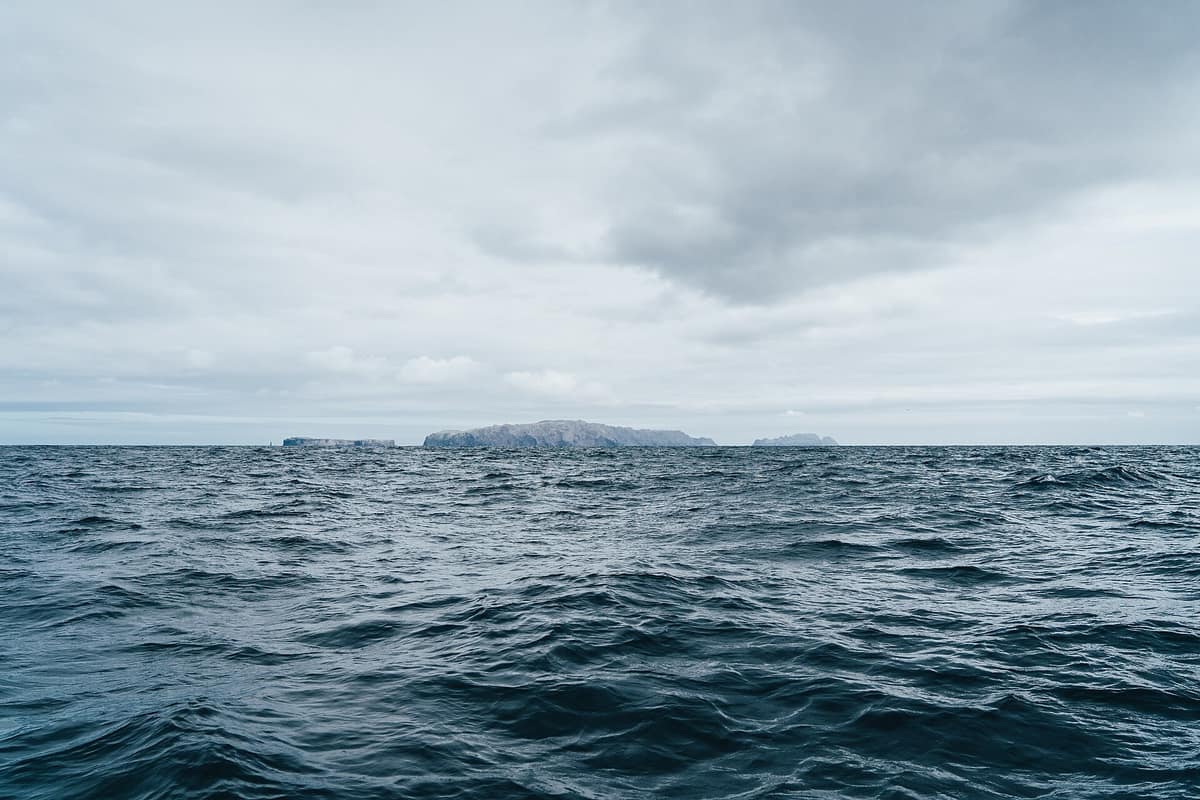
Desertas Islands Nature Reserve (Madeira)
Islas Desertas
Autonomous Region of Madeira (Deserta Grande / Bugio / Ilhéu Chão) · Portugal
Photo: André Moniz Vieira · CC BY-SA 4.0 · Wikimedia Commons
Uninhabited archipelago of three narrow volcanic islands (Deserta Grande, Bugio, and Chão), a strict sanctuary for the Mediterranean monk seal (Monachus monachus).
From Madeira on a clear day, three elongated, barren profiles trace the horizon. They hold no villages and no fields: only basalt, wind, and a tiny colony of Mediterranean monk seal that provided the founding rationale for the reserve. The Desertas Islands are an uninhabited archipelago comprising Ilhéu Chão, Deserta Grande, and Bugio, with a nature reserve encompassing 12,586 hectares of land and sea out to the hundred-metre bathymetric contour.
What makes it unique
The surrounding sea was protected in its entirety so that a tiny colony of Mediterranean monk seal—the Portuguese lobo-marinho—would have a safe breeding haven.
The place
Nature
The landscape
The Desertas were born of volcanism. Around 3.5 million years ago they formed a single landmass, part of the same volcanic volcanic edifice that created Madeira; once volcanic activity waned, marine erosion and weathering carved the relief into its modern contours. Basalts, tuffs, and scoria dominate the strata, and the topography continues shifting under the relentless assault of wind and waves.
Each isle possesses distinct character. Ilhéu Chão is the smallest, a near-horizontal plateau crowned by a lighthouse on its northern tip. Deserta Grande is the largest and highest, extending 11,700 metres and reaching 479 metres in elevation, riddled with sea caves, pocket gravel beaches, and several coastal fajãs. The two largest fajãs, Fajã Grande and Fajã da Doca, originated from massive landslides in 1894. Bugio, narrow and curved like an arch, presents the most rugged and eroded terrain of the trio.
At Fajã da Doca, that same historic rockfall created a small shingle spit sheltering a calm cove, serving as the official anchorage of the nature reserve.
Wildlife and seasons
The monk seal commands the spotlight, though it is far from alone. Coastal waters teem with damselfish, bogue, sea breams, groupers, and ornate wrasse, while several sea turtle species and cetaceans regularly patrol the surrounding ocean.
The skies belong to pelagic seabirds. The Desertas represent a vital North Atlantic breeding hub for Cory's shearwater, band-rumped storm petrel, Bulwer's petrel, and the Desertas petrel. Deserta Grande supports the Atlantic's largest colony of Bulwer's petrel, while the Desertas petrel breeds exclusively on the high plateaus of Bugio. These vulnerable seabirds find on these predator-free cliffs one of their final refuges. Year-round terrestrial residents include Berthelot's pipit and island canary, flanked by raptors such as common kestrel, common buzzard, and western barn owl.
On land, small endemics carry profound ecological weight. The giant Desertas wolf spider (Hogna ingens) survives solely in Vale da Castanheira on northern Deserta Grande. About 50 land snail species and subspecies occur, 44 of them endemic to the islands. The Madeira wall lizard (Teira dugesii mauli) is the sole terrestrial reptile.
The vascular flora numbers some 200 species, of which 30 % are Madeiran endemics. Deserta Grande preserves two exclusive single-island endemics: Sinapidendron sempervivifolium and Musschia isambertoi. Maritime halophyte scrub extends from sea level to 360 metres, giving way above 480 metres on Deserta Grande and Bugio to high-altitude mountain vegetation.
Species
With a page in the atlas
Being mentioned in a source doesn't guarantee sightings: check with the people who manage the area.
Memory and protection
History and conservation
Navigators documented the islands as early as the fourteenth century under their modern name or as the singular Ilha Deserta. Multiple Portuguese settlement attempts were made, all defeated by severe aridity and barren terrain. Between 1894 and 1971 the islands were owned by two English families of Madeira until the Portuguese state acquired them to create a nature reserve.
Strict total protection encompasses all terrestrial areas and adjacent shallow waters, while northern waters maintain partial protection. In 1998 the seal colony had plummeted to just eight individuals; today it numbers around forty. In March 2014 the reserve was awarded the European Diploma of Protected Areas by the Council of Europe.
Before you set off
Visiting
How to visit
Visiting independently is not allowed. The primary permitted activity is an interpretive guided walk along an established trail, followed by guided observation and listening to wildlife. Visitors arrive via licensed maritime tourism vessels, private yachts, or naval boats, always with prior authorization issued by the managing authority, the IFCN, requested through the SIMplifica online portal. The reserve does not provide boat transport.
Educational groups may apply for dedicated environmental education outings by contacting the IFCN directly.
Before you go
Access is strictly regulated: disembarking without prior written authorization from the IFCN is prohibited. Review permit procedures and marine guidelines on the managing authority's website well before your voyage.
Check access, rules and visiting conditions in the official information from the managing body before you set off.
Location
Where it is and how far it reaches
Boundary of Ilhas Desertas · IUCN Ia · © EEA, CDDA (CC-BY) The coordinate is estimated; it isn't a verified access point.
Transparency
Sources
The research data with its sources, and the official links for this place, are in the Spanish version of this page. See the Spanish version
Around it
The Ponta de São Lourenço Nature Reserve lies fifteen kilometres away at Madeira's eastern tip, and the Laurissilva Forest eighteen kilometres. The Selvagens Islands share with the Desertas Cory's shearwater colonies and an oceanic wilderness setting.
What else to explore nearby
Approximate straight-line distance between the edges of each area. It doesn't indicate access, routes or driving times.
- Ponta de São Lourenço Nature Reserve
Autonomous Region of Madeira (Madeira Island / Caniçal / Machico)
About 15 km away
Narrow, arid volcanic peninsula at the eastern tip of Madeira with red and black tuff cliffs and a haven for the Mediterranean monk seal (Monachus monachus).
JFMAMJJASONDAll year · Crowding moderate
- Madeira Natural Park - Primeval Laurisilva Forest
Autonomous Region of Madeira (Madeira Island / Ribeiro Frio / Fanal / Porto Moniz)
About 18 km away
The largest surviving tract of relict Tertiary subtropical laurel forest in the world (UNESCO World Heritage).
JFMAMJJASONDAll year · Crowding low
If you like this place, elsewhere in Europe
Distant places with uncommon wildlife and habitats in common. The most widespread species don't count. Sharing species doesn't imply a corridor or guaranteed presence.
- Selvagens Islands Nature Reserve
Autonomous Region of Madeira (Selvagem Grande / Selvagem Pequena)
In common: Calonectris borealis — wild coast, marine, steppe and grassland
Portugal's southernmost territory and one of Europe's oldest strict marine reserves (1971), harbouring the world's densest colony of Cory's shearwater (Calonectris diomedea).
JFMAMJJASONDMay – September · Crowding none
- Akamas Peninsula
Cyprus (Paphos — Polis / Latchi)
In common: Mediterranean monk seal — wild coast, marine
Mediterranean scrub and woodland, rugged gorges, and vital nesting beaches for green and loggerhead sea turtles in northwestern Cyprus.
JFMAMJJASONDApril – June · September – October · Crowding low
Entry #654 of the original atlas.