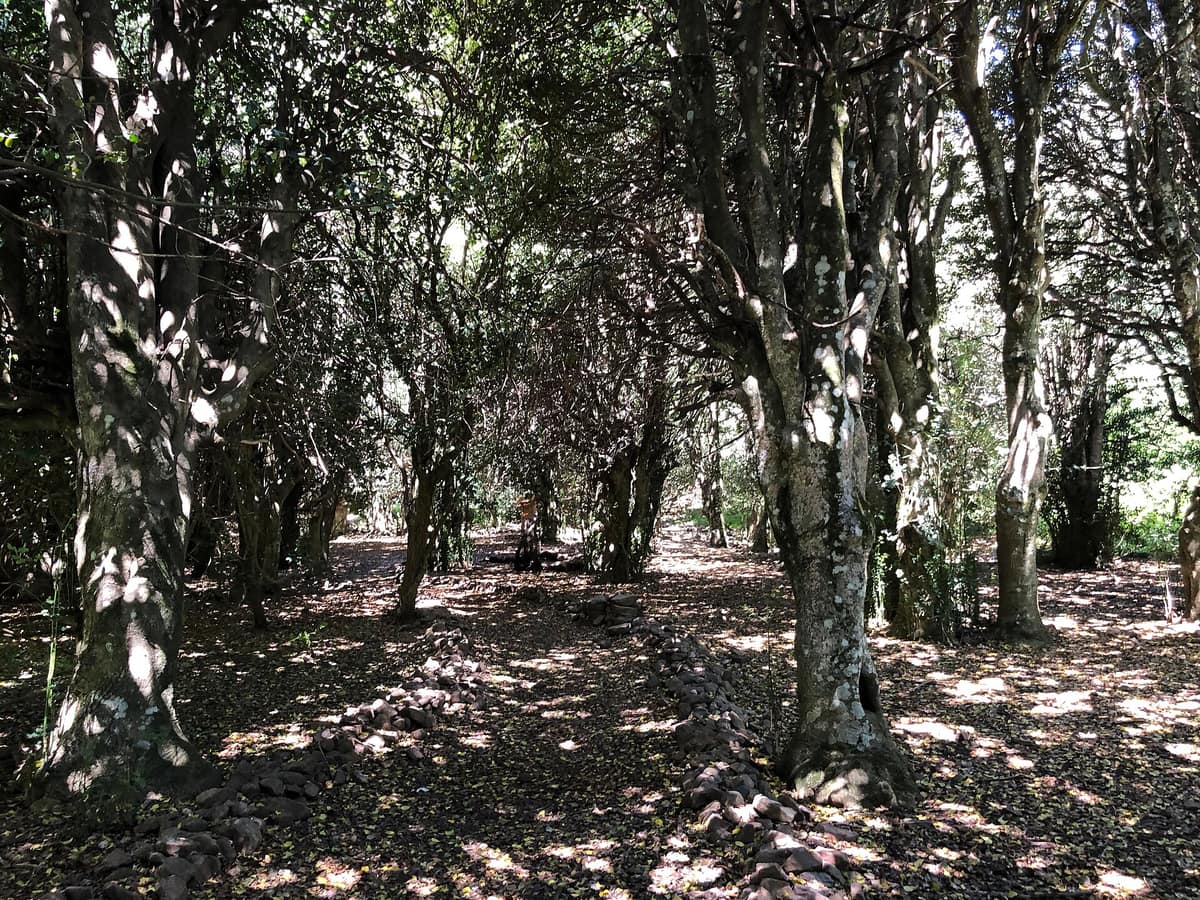
Madonie Regional Natural Park
Parco delle Madonie
Sicily (Palermo / Cefalù / Petralia Sottana / Castelbuono) · Italy
Photo: Davide Mauro · CC BY-SA 4.0 · Wikimedia Commons
A karst massif rising nearly 2,000 m above the Tyrrhenian Sea in Sicily, home to the critically endangered Sicilian fir (Abies nebrodensis).
Fewer than thirty trees of its kind have been censused, all clustered within a single ravine. The Sicilian fir, Abies nebrodensis, is the sole native Mediterranean fir species in Italy, found exclusively in the Madonie. There, along the northern coast of Sicily between the Imera and Pollina rivers, the park encompasses fifteen municipalities of the Metropolitan City of Palermo and the Madonie massif. According to the park itself, it represents the richest area of biodiversity in Sicily and one of the richest across the Mediterranean basin.
What makes it unique
A limestone massif where an almost extinct fir survives, the golden eagle nests once again, and trails cross Miocene fossils.
The place
Nature
The landscape
The Madonie are limestone mountains that rise straight from the sea. The central core, above 1600 metres, forms a karst plateau dotted with sinkholes known locally as «quarare», several hundred metres across and up to 25 deep, often sheltered by beech trees. Dominating this realm is Pizzo Carbonara, composed of hard grey coral limestone. The karst lacks surface watercourses but supports intricate subterranean hydrology: the Grotta Rossa, the Abisso del Vento and the Inghiottitoio Battaglietta are not for casual walkers and require expert guides. The depressions of Piano Battaglia and Battaglietta, with swallow-holes at their floor, form one of the most extensive karst landscapes in Sicily.
Towards the periphery, the bedrock shifts: the rugged limestone core gives way to softer rolling forms in clay-sandstone terrain. From the nineteen-fifties onwards, petroleum geologists surveyed the area and established numerous geological formations, including Mufara, Scillato, Fanusi, Crisanti and Caltavuturo, all validated by international science. The Madonie Geopark belongs, like all European Geoparks, to the UNESCO Global Geoparks Network.
Wildlife and seasons
The Sicilian fir is the most renowned botanical story. It once clothed many Sicilian peaks, but heavy felling and environmental shifts drove it nearly to extinction. Mature trees do not exceed 15 m; their cruciform crown gave rise to the dialect name «arvuli cruci cruci». In 1958, a mature specimen was identified in a private garden in Polizzi Generosa, and in 1984 the Region of Sicily established a nature reserve to safeguard the surviving individuals and the area’s high endemism. Today it remains among the most threatened Mediterranean plants on the IUCN Red List.
There is much more in these woodlands. Holly trees can reach fifteen metres, with an exceptional grove at Piano Pomo. In the oakwoods of Monte Quacella, evergreen holm oak meets deciduous beech—an unusual juxtaposition as other forest types usually separate them. In the Madonie, beech reaches the southern and western limits of its distribution. The Madonie milkvetch is a spiny cushion shrub found nowhere else.
Among raptors, the golden eagle returned to nest on high crags some years ago, boasting a wingspan exceeding two metres. Autumn is the best season to watch for it, though the park notes sightings require patience. Bonelli's eagle, the peregrine falcon and common kestrel are also present. Red-billed choughs inhabit the cliffs, while in winter Eurasian woodcocks forage at night across forest glades. Missing now are the bearded vulture, which nested on the Gonato cliffs in the nineteenth century, and the griffon vulture, whose last individuals disappeared some twenty years ago.
Smaller mammals include red foxes, least weasels, crested porcupines, European hares, edible dormice, wildcats and pine martens. In the nineteen-eighties fallow deer were reintroduced.
Species
With a page in the atlas
Being mentioned in a source doesn't guarantee sightings: check with the people who manage the area.
Memory and protection
History and conservation
The regional natural park was established by decree on 9 November 1989. Within a geoparque it is strictly forbidden to quarry rocks from outcrops or trade in minerals and fossils.
Before you set off
Visiting
How to visit
The Golden Eagle Trail is the ideal introduction. It begins from the Piano Farina car park at 1360 m, reached via Petralia Sottana along provincial road 54, around three kilometres before Piano Battaglia. It measures 2 km, climbs 45 m of elevation gain and takes about 2 hours. It passes an ancient màrcato—a traditional shepherd settlement still in seasonal use—and reaches a panoramic viewpoint over Vallone Canna taking in the Aeolian Islands to the north, Mount Etna to the east, and Monte Mufara and Monte Ferro to the west. Hikers who prefer waiting quietly can use the park’s bird hide.
In Petralia Sottana, the urban geological route leads past Miocene fossils, fossil corals set into the portal of the Church of San Pietro, historic fountains and a traditional icehouse.
Before you go
Collecting, damaging or removing wild plants is prohibited. Exploring karst caves requires experienced guides. Spring and autumn offer the most pleasant weather.
Check access, rules and visiting conditions in the official information from the managing body before you set off.
Location
Where it is and how far it reaches
Boundary of Parco delle Madonie · IUCN IV · © EEA, CDDA (CC-BY) The coordinate is estimated; it isn't a verified access point.
Transparency
Sources
The research data with its sources, and the official links for this place, are in the Spanish version of this page. See the Spanish version
Around it
At 20 km lies Parco dei Nebrodi.
What else to explore nearby
Approximate straight-line distance between the edges of each area. It doesn't indicate access, routes or driving times.
- Nebrodi Park (Sicily)
Sicily (Messina / Enna / Catania / Cesarò / Caronia)
About 20 km away
The largest continuous forest tract in Sicily (86.000 ha), featuring the island's most densely wooded peaks and the spectacular limestone crags of the Rocche del Crasto.
JFMAMJJASONDApril – June · September – November · Crowding very low
If you like this place, elsewhere in Europe
Distant places with uncommon wildlife and habitats in common. The most widespread species don't count. Sharing species doesn't imply a corridor or guaranteed presence.
- Gerês-Xurés Transboundary Biosphere Reserve
Northern Portugal (Viana do Castelo / Braga / Vila Real) (PT) / Galicia (Ourense / Lobios) (ES)
In common: European pine marten · European wildcat · Golden eagle — high mountain, karst and caves, old-growth forest
Portugal's sole National Park joined with Galicia's Serra do Xurés Natural Park, forming a transboundary reserve of granite monoliths and herds of free-roaming Garrano horses.
JFMAMJJASONDMay – October · Crowding low
- Călimani National Park - Volcanic Forest Massif
Suceava, Mureș, Bistrița-Năsăud, and Harghita Counties
In common: European pine marten · European wildcat · Golden eagle — high mountain, old-growth forest
The largest extinct volcanic crater in Europe (10 km in diameter) covered with high-mountain fir and spruce forests.
JFMAMJJASONDJune – October · Crowding very low
- Paneveggio - Pale di San Martino Natural Park
Trentino (San Martino di Castrozza / Predazzo / Tonadico)
In common: European pine marten — high mountain, karst and caves, old-growth forest
The 'Forest of the Violins' (resonance spruce harvested by Stradivarius) beneath the spectacular dolomitic spires of the Pale di San Martino.
JFMAMJJASONDJune – October · Crowding low
Entry #556 of the original atlas.