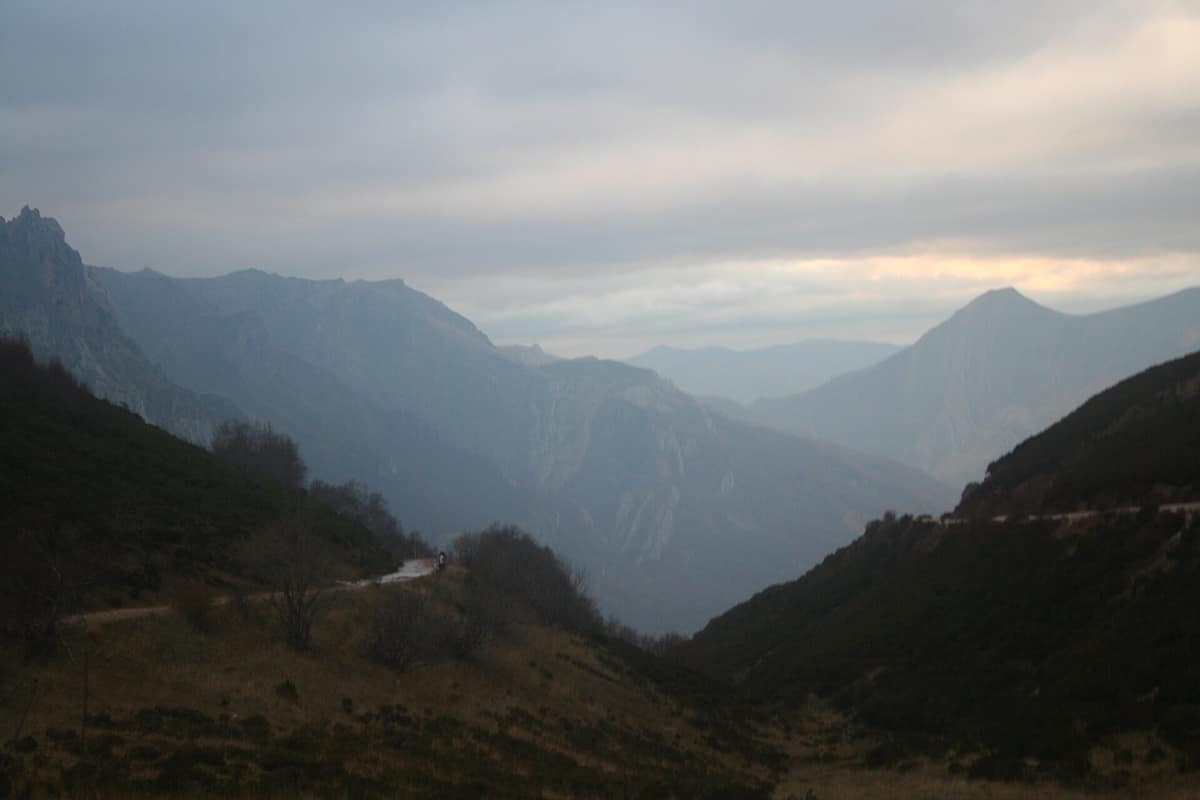
Somiedo Natural Park
Parque Natural de Somiedo
Asturias (Pola de Somiedo / Valle de Lago / Saliencia) · Spain
Photo: Ramón from Llanera, España · CC BY-SA 2.0 · Wikimedia Commons
The iconic sanctuary of the Cantabrian brown bear, with deep glacial troughs, the lakes of Saliencia, and traditional thatched teito cabins.
In Somiedo, the entire municipality is parkland. It is as simple and as unusual as that: Somiedo Natural Park, located in the Cantabrian Mountains of Asturias, covers 29 122 hectares and exactly coincides with the municipality of Somiedo, which lies entirely within its boundaries. It has been a natural park since 1988, and UNESCO declared it a Biosphere Reserve in the year 2000. Here the mountains mark the geological transition from western siliceous rocks to eastern limestones, with four primary valleys—Somiedo, Valle de Lago, Saliencia, and Pigüeña—drained by their own rivers.
What makes it unique
An alpine mountain realm of glacial tarns, intact old-growth beechwoods, and historic braña summer pastures where traditional pastoral life endures across the landscape.
The place
Nature
The landscape
Glacial ice left its indelible mark upon the heights. Glacial action sculpted lakes, tarns, and peat bogs, sheltering arctic-alpine and boreal plants; within the bogs thrive English sundew, lesser bladderwort, and shrubby cinquefoil. The Saliencia Lakes provide the clearest example: four glacial tarns set in high alpine terrain, with the largest, Lake Calabazosa (Lago Negro), plunging to 60 metres in depth.
Lower down, forests cover nearly a quarter of the park. Beechwoods flourish across vast tracts in Saliencia and Valle de Lago, interspersed with oaks, ashes, maples, and lindens. The Portuguese oak, a Mediterranean species, occurs within Asturias only in Somiedo and the Cares gorge. The woodlands balance beech on shaded northern slopes with oaks across sunny exposures. Alpine meadows showcase the trumpet narcissus, alongside the Somiedo knapweed, a rare endemic.
Wildlife and seasons
The park is a renowned wildlife haven. It shelters the brown bear, grey wolf, wild boar, Cantabrian Pyrenean chamois, roe deer, broom hare, Pyrenean desman, Eurasian otter, pine marten, common genet, European wildcat, stone marten, and badger. Birds number roughly 120 species, led by the Cantabrian western capercaillie, golden eagle, Egyptian vulture, northern goshawk, and peregrine falcon; woodpeckers include the black woodpecker and middle spotted woodpecker.
Early autumn marks a key season, when the red deer rut echoes across the valleys. If you walk down through the beechwood of La Enramada, particularly at dawn or dusk, roe deer and chamois are frequently observed.
Species
With a page in the atlas
Being mentioned in a source doesn't guarantee sightings: check with the people who manage the area.
Memory and protection
History and conservation
Teitos are traditional stone cabins roofed with broom thatch that sheltered herders and cattle, dating back to medieval times. At Braña de Mumián, the Fuente el Caño fountain preserves historic olleras, stone basins where flowing mountain water chilled fresh milk vessels. The vaqueiros de alzada, a historic transhumant pastoral community, maintain distinct folklore and oral traditions.
The beechwood of La Enramada is a restricted-use reserve, and Spanish mastiffs guarding free-ranging cattle form an integral part of the living landscape.
Before you set off
Visiting
How to visit
Begin in Pola de Somiedo. The Reception and Interpretation Centre offers an interactive audiovisual exhibition covering geology, flora, fauna, and local ethnography, alongside details on walking itineraries, park bylaws, and local museums like the Ethnographic Museum and traditional homesteads in Veigas. The Somiedo Ecomuseum operates two branches: rural trades in Pola, and traditional thatch-roofed dwellings in Veigas. The Brown Bear Foundation (Fundación Oso Pardo) also maintains an information desk in Pola.
Twelve well-marked trails cross high summer pastures, lakes, and mountain crests on foot, horseback, or mountain bike. Three routes capture the essence of the park. The Saliencia Lakes trail is a moderate 7.6 km loop departing from the Alto de la Farrapona pass at 1,708 metres—the boundary between Somiedo and Babia—passing Lakes Cueva, Almagrera, Cerveriz, and Calabazosa. The Braña de Mumián trail (PR-AS 11) measures 12.2 km of moderate walking, climbing among thatched cabins to the strictly protected La Enramada beechwood. The Lago del Valle route spans 14.6 km among meadows and cabins to Asturias's largest glacial lake. For an effortless panoramic view, the Mirador del Príncipe in La Peral overlooks El Cornón peak and Mumián pasture.
Before you go
If you encounter mastiffs guarding livestock, do not approach, pet, or feed them: they are actively working guardian dogs. In the La Enramada beechwood, walk quietly.
Check access, rules and visiting conditions in the official information from the managing body before you set off.
Location
Where it is and how far it reaches
Boundary of Somiedo · IUCN VI · © EEA, CDDA (CC-BY) The coordinate is estimated; it isn't a verified access point.
Transparency
Sources
The research data with its sources, and the official links for this place, are in the Spanish version of this page. See the Spanish version
Around it
Fuentes del Narcea, Degaña e Ibias y Muniellos lies just one kilometre away. Further afield, Parque Nacional de los Picos de Europa shares the chamois, wolf, and brown bear; Parco Nazionale della Majella and Parco Nazionale d'Abruzzo, Lazio e Molise also harbor chamois, wolves, and brown bears, while Parc Nacional d'Aigüestortes i Estany de Sant Maurici shares the chamois and capercaillie.
What else to explore nearby
Approximate straight-line distance between the edges of each area. It doesn't indicate access, routes or driving times.
- Fuentes del Narcea, Degaña and Ibias Natural Park and Muniellos Reserve
Asturias (Cangas del Narcea / Degaña / San Antolín de Ibias)
About 1 km away
The largest sessile oak (Quercus petraea) forest in Spain and one of the best preserved in Europe (Muniellos).
JFMAMJJASONDMay – November · Crowding very low
If you like this place, elsewhere in Europe
Distant places with uncommon wildlife and habitats in common. The most widespread species don't count. Sharing species doesn't imply a corridor or guaranteed presence.
- Picos de Europa National Park
Asturias / Cantabria / León (Cangas de Onís / Arenas de Cabrales / Potes / Posada de Valdeón)
In common: Pyrenean chamois · Western capercaillie · Brown bear — high mountain, glacial landscape, old-growth forest
Spain's first National Park (1918), three alpine limestone massifs rising to 2,600 m just 15 km from the Cantabrian Sea.
JFMAMJJASONDJune – October · Crowding moderate
- Aigüestortes and Lake Saint Maurici National Park
Catalonia (Lleida)
In common: Pyrenean chamois · Western capercaillie — high mountain, glacial landscape, old-growth forest, lake
The only National Park in Catalonia, a glacial circus wonderland harboring over 200 tarns (estanys) beneath the iconic twin summits of Els Encantats.
JFMAMJJASONDJune – October · Crowding moderate
- Monti Sibillini National Park
Marche / Umbria (Visso / Norcia / Castelluccio di Norcia)
In common: Pyrenean chamois · Brown bear · Grey wolf — high mountain, lake
The legendary Apennine range of Monte Vettore (2.476 m), the Infernaccio Gorge, and the highland plateaus of Castelluccio.
JFMAMJJASONDMay – October · Crowding moderate
- Majella National Park
Abruzzo (Sulmona / Chieti / Pescara)
In common: Pyrenean chamois · Brown bear · Grey wolf — high mountain, old-growth forest
The 'Mother Mountain' of Abruzzo (Monte Amaro 2.793 m), a UNESCO Global Geopark of colossal karst canyons, wild plateaus, and hanging rock hermitages.
JFMAMJJASONDMay – October · Crowding low
Entry #485 of the original atlas.