Abruzzo, Lazio and Molise National Park
Parco Nazionale d'Abruzzo, Lazio e Molise
Abruzzo, Lazio and Molise regions (L'Aquila, Frosinone and Isernia provinces) · Italy
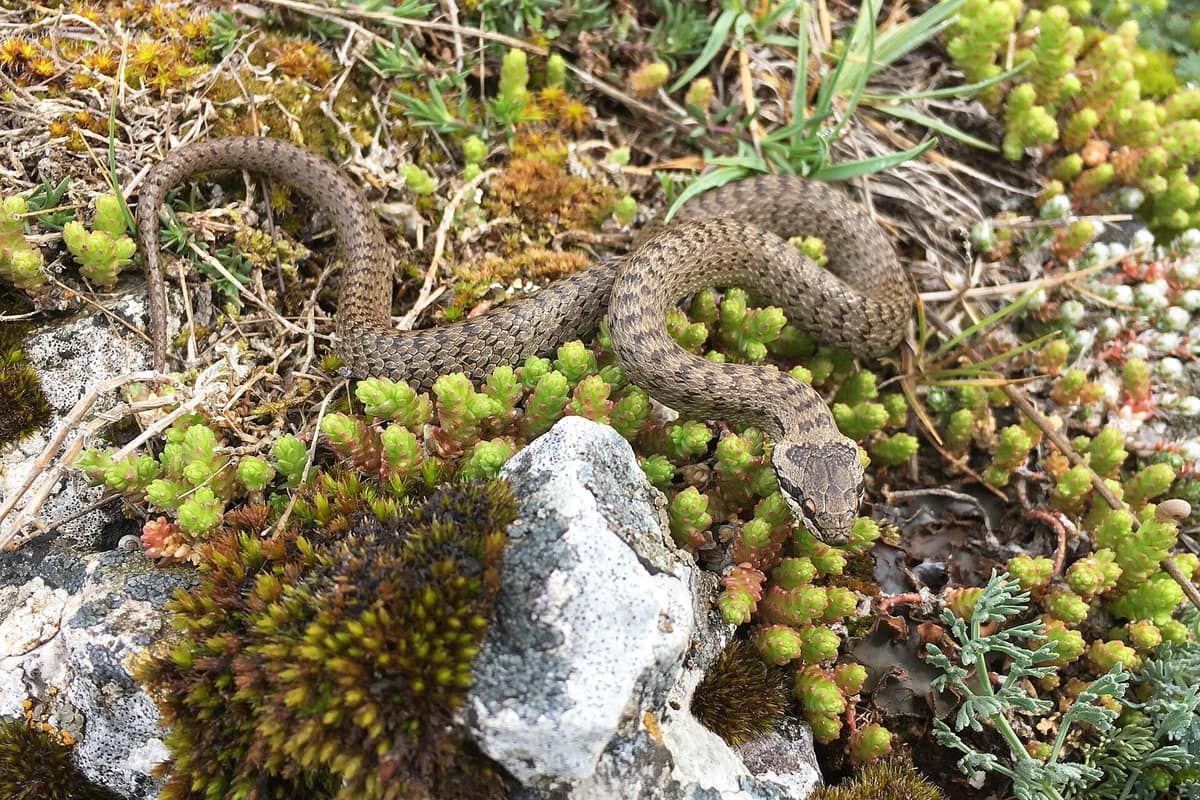
Photo: Bouke ten Cate · CC BY 4.0 · Wikimedia Commons
Sanctuary of the Marsican brown bear and Apennine wolf in primeval beechwoods and high alpine valleys of central Italy.
At the close of the nineteenth century, only a handful of Marsican brown bears and Apennine chamois clung to survival in these rugged mountains. In 1921 a private federation leased 500 hectares of the Camosciara from the municipality of Opi, high in the Fondillo valley, and that tiny enclave became the seed of a national park that today encompasses 50.000 hectares, buffered by a further 80.000 hectares.
What makes it unique
The last sanctuary of the Marsican brown bear, one of the rarest bear populations on Earth, alongside a chamois endemic to these massifs and ancient beech forests inscribed as a UNESCO World Heritage Site.
The place
Nature
The landscape
The park's relief consists of massive limestone massifs aligned along the Monti della Meta: Monte Petroso (2.249 m), Monte Marsicano (2.245 m), Monte Meta (2.242 m), Monte Tartaro, Monte Jamiccio, Monte Cavallo, and Monte Palombo. The highest peaks retain clear marks of the last Quaternary glaciation, displaying cirques and moraines across the Monti della Meta, Serra delle Gravare, Petroso, and Palombo. On the Biscurri plateau, sinkholes were hollowed out by ancient glaciers and subsequent meltwaters.
Beech is the undisputed master. It covers nearly 60 % of the park's territory and typically grows between 900 and 1.800 m, shifting hues with every passing season. Between Pescasseroli and Villavallelonga survive the only multi-centenary beech groves that escaped logging; in 2017 five of these old-growth stands, spanning over 1.000 hectares with trees up to 560 years old, were inscribed as a UNESCO World Heritage Site alongside the ancient beech forests of the Carpathians and other European regions. Yew is rare, sheltering in the wildest, highest folds of the forest. Higher up, between the beech belt and alpine pastures, dwarf mountain pine persists as a glacial relict, particularly in the Camosciara; and in the Camosciara and Valle Fondillo grows the Villetta Barrea European black pine, an endemic variety perhaps dating back to the Tertiary.
Above 1.900-2.000 m stretch alpine grasslands which, together with subalpine meadows and clearings, cover more than 30 % of the national park.
Wildlife and seasons
The vascular flora exceeds 2.000 species. In spring, during May and June, blooms Iris marsica, a rare endemic confined to localized calcareous slopes, while in the most secluded corners flowers the park's most celebrated, grand, and fragile orchid: the yellow lady's slipper, Cypripedium calceolus, thriving in the strict reserve but threatened by tourist gathering.
The iconic sovereign of these mountains is the Marsican brown bear. Reaching over 200 kg, it is solitary and shy, with a wild population numbering fewer than 100 individuals. Catching sight of it requires great discretion: the park's fauna is elusive and cautious. With patience, silence, and deep respect for the habitat, fortunate visitors may observe chamois, bear, wolf, red deer, and golden eagle.
The Apennine Pyrenean chamois, endemic alongside the Marsican bear, escaped extinction on the steep cliffs of the Camosciara—a place-name echoing its relict survival; from here derived animals used to reintroduce chamois to the Majella and Gran Sasso. The Apennine grey wolf is the apex predator of the park and the entire Apennine chain; in 1970 only about ten individuals survived. The red deer had vanished when the park was formed, and in 1971 the first eastern Alpine animals were reintroduced; the roe deer, also reintroduced, is now the most frequently sighted ungulate. In 2018 the presence of the Eurasian otter was confirmed in the pristine waters of the Sangro River, more than forty years after the last historical record.
Among birds, the golden eagle nests with six breeding pairs in remote crags, frequently seen soaring over central valleys. Forests shelter European green woodpeckers and the rare white-backed woodpecker, with Lilford's woodpecker thriving in the old-growth stands of Monte Tranquillo and the Monti della Meta. Rocky ramparts host the red-billed chough and yellow-billed chough, while streams are patrolled by the white-throated dipper. Amphibians in spring-fed bogs include the spectacled salamander, Italian newt, and common fire salamander; insects feature Apollo butterflies and the rare beech longhorn, Rosalia longicorn.
Species
With a page in the atlas
Being mentioned in a source doesn't guarantee sightings: check with the people who manage the area.
Memory and protection
History and conservation
The concept of the national park arose after the First World War through the vision of environmentalist and deputy Erminio Sipari. On 25 November 1921 Sipari and the Pro Montibus Federation began managing a protected enclave between Valle Fondillo and Camosciara. In 1933 the fascist regime dissolved the park's autonomous governing authority; it was reconstituted in 1951, reinforcing ranger surveillance, scientific research, and hunting bans.
The 1976 expansion to the Monte Marsicano massif successfully thwarted a sprawling ski resort between Pescasseroli and Bisegna. Today the park is zoned: the strict nature reserve restricts entry to authorized permits for scientific study, while Zone B encompasses extensive protective forests, mainly beech, and alpine pastures.
Rewilding projects
Conservation organisations
Before you set off
Visiting
How to visit
State highway 83 Marsicana crosses the park from north to southeast through Pescasseroli, Opi, Villetta Barrea, Civitella Alfedena, Barrea, and Alfedena, which serve as the primary gateways. Visitor centres provide environmental education, interpretation, and local information across these towns. Dedicated centres focus on nature and wildlife at Pescasseroli, the wolf at Civitella Alfedena, aquatic ecosystems at Villetta Barrea, the Apennine chamois at Opi, roe deer at Bisegna, local flora at Ortona dei Marsi, and the brown bear at Pizzone, Villavallelonga, and Campoli Appennino. Pescasseroli also hosts park headquarters, the natural history museum, historical museum, botanical garden, Apennine arboretum, and a wildlife area. Semi-wild enclosures are situated at Civitella Alfedena (wolf and lynx) and Villavallelonga (bear and deer).
The official trail network features around 150 ecotourism routes totalling over 250 km. Hiking in Zone B is free. The Val Cervara hike winds through ancient old-growth beechwoods ending at the bear centre in Villavallelonga, while the trail linking Camosciara with the waterfalls is graded T (tourist difficulty). Park managers recommend visiting in spring and early summer to enjoy nature's awakening, blooms, and birdsong.
Before you go
Visitor centres operate seasonal opening schedules; verify current hours before travelling. Access to the strict nature reserve (Zone A) is strictly prohibited without special authorization. The general reserve regulates vehicle access, firewood collection, and gathering of wild forest products.
Check access, rules and visiting conditions in the official information from the managing body before you set off.
Location
Where it is and how far it reaches
Boundary of Parco nazionale dell'Abruzzo, Lazio e Molise · IUCN II · © EEA, CDDA (CC-BY) The coordinate is estimated; it isn't a verified access point.
Transparency
Sources
The research data with its sources, and the official links for this place, are in the Spanish version of this page. See the Spanish version
Around it
The Riserva Naturale Guidata Gole del Sagittario lies about 3 km away. Twelve kilometres away is Parco Nazionale della Majella, which received chamois born here; Gole di Celano - Canyon delle Gole di Celano-Aielli sits sixteen kilometres away, and Parco Nazionale del Gran Sasso e Monti della Laga twenty-seven kilometres away.
What else to explore nearby
Approximate straight-line distance between the edges of each area. It doesn't indicate access, routes or driving times.
- Sagittario Gorge Nature Reserve
Abruzzo (Anversa degli Abruzzi / Scanno)
About 3 km away
An awe-inspiring karst canyon carved by the Sagittario River between vertical limestone cliffs hundreds of metres high.
JFMAMJJASONDMay – October · Crowding very low
- Majella National Park
Abruzzo (Sulmona / Chieti / Pescara)
About 12 km away
The 'Mother Mountain' of Abruzzo (Monte Amaro 2.793 m), a UNESCO Global Geopark of colossal karst canyons, wild plateaus, and hanging rock hermitages.
JFMAMJJASONDMay – October · Crowding low
- Gran Sasso and Monti della Laga National Park
Abruzzo / Lazio / Marche (L'Aquila / Teramo / Rieti)
About 27 km away
The Italian 'Little Tibet' (Campo Imperatore) crowned by Corno Grande (2.912 m, the highest peak in the Apennines) and the Calderone glacier.
JFMAMJJASONDMay – October · Crowding moderate
If you like this place, elsewhere in Europe
Distant places with uncommon wildlife and habitats in common. The most widespread species don't count. Sharing species doesn't imply a corridor or guaranteed presence.
- Picos de Europa National Park
Asturias / Cantabria / León (Cangas de Onís / Arenas de Cabrales / Potes / Posada de Valdeón)
In common: Pyrenean chamois · Rosalia longicorn · Griffon vulture — high mountain, karst and caves
Spain's first National Park (1918), three alpine limestone massifs rising to 2,600 m just 15 km from the Cantabrian Sea.
JFMAMJJASONDJune – October · Crowding moderate
- Domogled - Cerna Valley National Park
Caraș-Severin, Mehedinți, and Gorj Counties
In common: European black pine · Cypripedium calceolus · Brown bear — high mountain, primary forest, karst and caves
Deep tectonic canyon flanked by Banat black pine and catchments with virgin montane beech woods.
JFMAMJJASONDMay – October · Crowding very low
- Sierras de Cazorla, Segura y Las Villas Natural Park
Andalusia (Jaén — Cazorla / Segura de la Sierra / Villacarrillo)
In common: European black pine · Bearded vulture · Griffon vulture — karst and caves
Spain's largest protected area: black pine forests, headwaters of the Guadalquivir and the reintroduction of the bearded vulture in Andalusia.
JFMAMJJASONDApril – June · September – November · Crowding low
- Retezat National Park
Hunedoara County (Hațeg)
In common: Cypripedium calceolus · Rosalia longicorn · Brown bear — high mountain
The realm of the granitic and glacial Retezat, with over 80 crystal tarns and the Gemenele scientific reserve.
JFMAMJJASONDJune – October · Crowding low
Entry #10 of the original atlas.