Stelvio National Park
Parco Nazionale dello Stelvio / Nationalpark Stilfserjoch
Lombardy / Trentino-Alto Adige (Bormio / Ortler / Sulden / Val Martello) · Italy
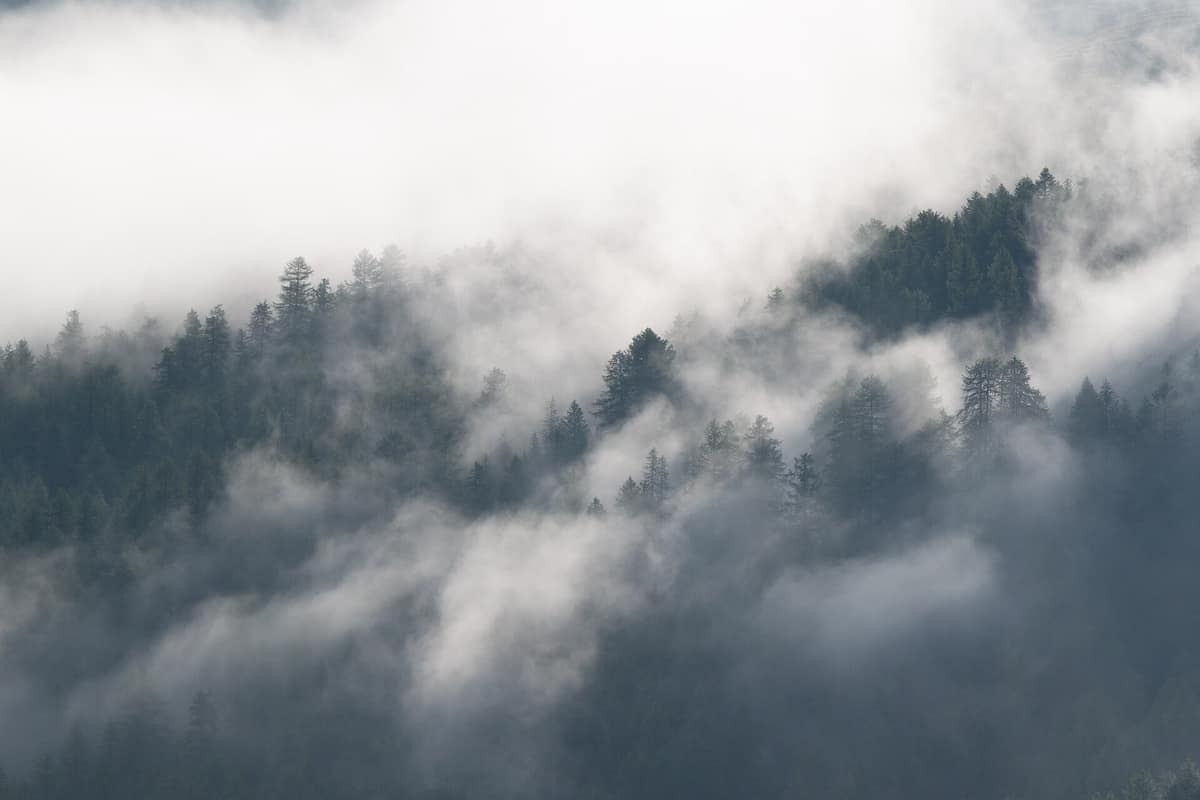
Photo: Cristina.Paveri · CC BY-SA 4.0 · Wikimedia Commons
One of Europe's oldest and most majestic Alpine national parks (Ortles 3,905 m), featuring vast valley glaciers and massive herds of red deer and chamois.
A road climbs to 2,758 metres, offering sweeping vistas of almost everything preserved in Stelvio National Park: glaciers, moraines, screes, and, further down, dark coniferous forests. The Stelvio Pass is the second highest paved mountain pass in Europe, and from it extends the main ridge of a park embracing nearly every summit of the Ortles group, across Lombardy, Trentino, and South Tyrol. The whole park is measured in vertical drop: from 650 metres in the valley floor to 3,900 on the peaks.
What makes it unique
A park of towering Alpine proportions, with a summit of 3,905 metres, valley glaciers, a famous road pass, and bearded vultures back in the sky.
The place
Nature
The landscape
The park was created in 1935 to safeguard the Ortles-Cevedale group and expanded in 1977. The culminating point is the Ortles at 3,905 metres; the Gran Zebrù reaches 3,857 and the Cevedale 3,769. On the Lombard slope lies the Ghiacciaio dei Forni, the largest valley glacier in the Italian Alps. The glaciers of these high chains have carved both the high-mountain landscape and the fertile valleys of the whole region.
The rocks recount another chapter. The massif belongs to the Central Alps, but features two distinct rock families: those of the central limestone Alps and those of the southern ones. In Val Zebrù, a sharp fault, the Faglia di Zebrù, separates crystalline metamorphic rocks in the south from sedimentary limestones in the north, characteristic of the Prealps. The forest clearly signals the shift: right where Norway spruce stands give way to dwarf mountain pine scrub, the fault line runs.
Vegetation changes with altitude. Between 1000 and 2000 metres coniferous forests dominate; the tree line lies around 2600 metres, where dwarf shrubs begin, and above 2800 only bare rock remains. In the peat bogs live carnivorous plants such as Drosera rotundifolia and Pinguicula alpina.
Wildlife and seasons
High up, life adapts. The glacier buttercup blooms during the snowmelt and occasionally appears even at 4,275 metres, a record among Alpine flora. The Alpine marmot stores hay in late summer and hibernates for nearly six months. The Alpine ibex is one of the Alps' finest climbers, leaping several metres across crags.
Mammals include red deer, chamois, roe deer, ibex, marmots, foxes, stoats, squirrels, hares, badgers, and weasels. Nesting birds include the rock ptarmigan, rock partridge, yellow-billed chough, capercaillie, black grouse, and golden eagle, alongside the successfully reintroduced bearded vulture. Val Zebrù is one of the bearded vulture's most frequented haunts, where spotting ungulates, especially red deer and ibex, is remarkably easy.
Species
With a page in the atlas
Being mentioned in a source doesn't guarantee sightings: check with the people who manage the area.
Memory and protection
History and conservation
The rustic wooden huts of Val Zebrù testify to ancient agricultural use. The Stelvio road was built starting in 1820. The park is managed by a consortium comprising the Ministry of the Environment, the autonomous provinces of Bolzano and Trento, and the Lombardy Region.
Before you set off
Visiting
How to visit
The highlight in Stelvio is two nature trails starting right by the pass along the SS 38. The Sentiero della Criosfera, focused on permafrost, glacial features, and karst, takes one hour, covers 2 km, and gains 250 metres of elevation. The Sentiero del Cambiamento Climatico can be started at bend 8 of the road at 2700 m, or done in reverse from the valley bottom of Valle del Braulio.
Val Zebrù, reached from Bormio via the SP 29 towards Gavia up to San Nicolò and along the road to Madonna dei Monti and Niblogo where parking is available, is the other major destination. Three routes: the raptor trail, from Fantelle to Zebrù di Fuori via Alpe Solaz, covering 4.3 km in two hours with 345 metres of ascent; the climb from Baita del Pastore to Passi Zebrù and Rifugio Pizzini, taking three hours and twenty minutes with 839 metres; and the connection from Rifugio V° Alpini to Passi Zebrù, 4.5 km in two hours and forty minutes.
If you want to discover the plant species before ascending, the Rezia Alpine Botanical Garden in Bormio was founded in 1982 to showcase the park's flora. The Lombard sector also organizes year-round activities: guided walks, workshops, events, and botanical garden visits.
Before you go
The SS 38 closes in winter. Camping in the park is only allowed in tents at designated campsites; flying over protected areas with any aircraft or drone is prohibited. Never feed wild animals: human food draws them closer to villages. Brown bears and wolves are naturally elusive and encounters are extremely rare, but specific safety rules apply if you come across one.
Check access, rules and visiting conditions in the official information from the managing body before you set off.
Location
Where it is and how far it reaches
Boundary of Parco nazionale dello Stelvio · IUCN II · © EEA, CDDA (CC-BY) The coordinate is estimated; it isn't a verified access point.
Transparency
Sources
The research data with its sources, and the official links for this place, are in the Spanish version of this page. See the Spanish version
Around it
The park borders the Swiss National Park, Parc Naissunal Svizzer, to the north, adjoining Biosfera Val Müstair; just a few kilometres away lies Parque Natural Adamello-Brenta. With glaciers, ibex, and bearded vultures, it resembles Gran Paradiso, Vanoise, Alpi Marittime, and Ankogelgruppe.
What else to explore nearby
Approximate straight-line distance between the edges of each area. It doesn't indicate access, routes or driving times.
- Val Müstair Biosphere Reserve
Graubünden (Santa Maria Val Müstair)
Borders this area
Pristine alpine valley bordering the Swiss National Park preserved from heavy transit routes.
JFMAMJJASONDJune – October · Crowding very low
- Swiss National Park - Core Zone
Grisons (Zernez / Engadin)
Borders this area
The oldest National Park in the Alps (founded in 1914), a Strict Nature Reserve where all human intervention is forbidden.
JFMAMJJASONDJune – October · Crowding low
- Adamello-Brenta Natural Park
Trentino (Pinzolo / Madonna di Campiglio / Tovel)
About 11 km away
Two opposing geological worlds facing each other: the limestone spires of the Brenta Dolomites and the glaciated granite massif of the Adamello (home to Trentino's historic brown bear).
JFMAMJJASONDJune – October · Crowding moderate
If you like this place, elsewhere in Europe
Distant places with uncommon wildlife and habitats in common. The most widespread species don't count. Sharing species doesn't imply a corridor or guaranteed presence.
- Vanoise National Park
Auvergne-Rhône-Alpes (Savoie)
In common: Pinus cembra · Alpine ibex · Bearded vulture — high mountain, glacial landscape
France's first national park (1963), created to save the Alpine ibex: glaciers, alpine grasslands, and one of the Alps' greatest ibex populations.
JFMAMJJASONDJune – September · Crowding moderate
- Maritime Alps Natural Park
Piedmont (Cuneo / Valdieri / Entracque)
In common: Alpine ibex · Bearded vulture · Chamois — high mountain, glacial landscape, old-growth forest
United with France's Mercantour National Park, it forms a massive cross-border Alpine-Mediterranean wilderness crowned by Mount Argentera (3.297 m).
JFMAMJJASONDJune – October · Crowding low
- Mont Avic Natural Park
Aosta Valley (Champdepraz / Champorcher)
In common: Drosera rotundifolia · Alpine ibex · Chamois — high mountain, old-growth forest
The first Natural Park in the Aosta Valley, featuring the region's largest continuous stand of mountain pine (Pinus uncinata) and over 30 glacial cirque tarns.
JFMAMJJASONDJune – October · Crowding very low
- Aigüestortes and Lake Saint Maurici National Park
Catalonia (Lleida)
In common: Drosera rotundifolia · Bearded vulture — high mountain, glacial landscape, old-growth forest
The only National Park in Catalonia, a glacial circus wonderland harboring over 200 tarns (estanys) beneath the iconic twin summits of Els Encantats.
JFMAMJJASONDJune – October · Crowding moderate
Entry #536 of the original atlas.